



Chinese Indigo
Indigofera incarnata
Pickup available at Aiken Nursery
Usually ready in 2-4 days
The genus is the one that turned the Lowcountry blue. Indigofera gave colonial South Carolina its great cash crop alongside rice, the dye that Eliza Lucas Pinckney coaxed into commercial cultivation around Charleston in the 1740s and that filled the colony's coffers for a generation, made with skill drawn largely from enslaved West Africans. That fortune rested on a tropical cousin, Indigofera tinctoria, but the family trait runs through the whole genus, and the leaves of this one will give up the same blue if you care to steep them. We grow the plant for the flowers instead.
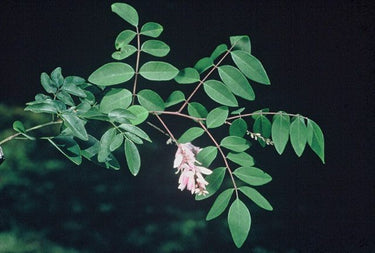
Indigofera incarnata, the Chinese indigo, comes from the streambanks and open woods of China and Japan, and earns the other common name, summer wisteria, honestly: through June and July the plant hangs narrow four to eight inch racemes of small pea flowers, twenty to forty to a spike, in a clear soft pink. The bloom opens on the current year's wood and carries on in scattered flushes toward September. (The white-flowered form is sold separately as 'Alba'; this is the rose-colored species, whatever a careless label might once have suggested.)
Low and traveling, a foot or two tall and three or four wide, the Chinese indigo suckers gently into a soft mound of fine pinnate foliage, and, being a legume, gives nitrogen back to the ground it sits in. Cut the plant hard in late winter and it returns to flower right through the heat, a quiet rose-pink drift in the stretch of summer when most shrubs have already called it a year.
Use Chinese indigo as a flowering groundcover on a bank or at the front of a border, where the low, spreading habit can knit awkward ground together and the long pink season fills the summer lull. Give sun, a little afternoon shade where summers run brutal, and decent drainage, and pair with grasses, late perennials, or other tough sun-lovers; bees and other pollinators work the flowers all season.
- Hardiness
- USDA Zones 6–9
- Sun
- Full Sun, Part Shade
- Soil
- Well-drained
- Mature size
- Height 1–2 Feet · Spread 3–4 Feet
- Growth rate
- Moderate
- Seasonality
- Deciduous
Soft pink, pea-shaped flowers in narrow 4 to 8 inch racemes through summer into September, on new wood
From rooting to shipping, our top priority is ensuring you receive healthy, thriving plants for your garden’s success.
Because most of our plants are grown from rooted cuttings — alongside seed, air layering, and grafting chosen for each variety — you receive a stronger, true-to-type plant that establishes quickly in your garden.
Raised on organic soil blends and eco-friendly pest management — never harsh chemicals — your plant arrives healthy for your garden, your family, and the pollinators they feed.
Every purchase gives back. We donate to the Aiken Arboretum and support local wildlife conservation, so growing your garden helps protect the wider ecosystem too.

All our plant material is carefully propagated, grown, and nurtured at our humble nursery in Aiken, South Carolina.

Your plant arrives carefully packed and ready to settle in. Unpack them promptly, give them a day or two to acclimate, then plant following the notes we include — that’s all it takes. Clear care guidance comes with every order, so success is the easy part.
What to expect upon delivery
All our plants are sold in 1-gallon sizes, though the height of each plant can vary depending on its growth rate and seasonality, typically ranging from 1/2 to 2.5 feet.
Each plant is carefully packaged with its roots enclosed in a secure plastic bag containing moist soil, forming a compact root ball. To ensure safe transport, the box is padded with recycled newspaper, providing both stability and eco-friendly protection from weather during shipping.
What is your return policy?
Review our full return policy information on our SHIPPING AND RETURNS POLICY page.
What payment methods can I use?
We offer 35 different payment methods including major providers like Mastercard, Visa, PayPal, American Express and Diners as well as many different local payment methods including Klarna, iDEAL, AliPay, Sofort, giropay, and many more.
Can I make changes to my order after it’s been placed?
At Woodlanders, we strive to fulfill orders as quickly as possible. Therefore, we can only accommodate changes to your order within the first 24 hours after it has been placed. These changes include adding or removing products and modifying the delivery address. If you need to make any changes or if there has been a mistake with your order information, please reach out to us promptly via our CONTACT page with your order number for the quickest resolution.
Your satisfaction is our priority, and we appreciate your understanding and cooperation.