

Deer-Resistant Fragrant Native

Sweetshrub 'Athens'

Calycanthus floridus 'Athens'

$30.00 Sold out
USDA Zones 5–9 Full Sun and Part Shade Matures 6–8 Feet

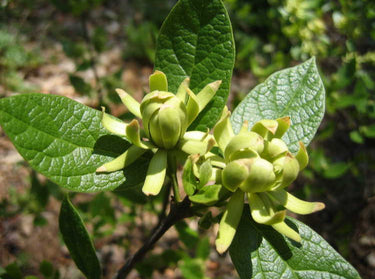
The yellow-flowered sweetshrub, Calycanthus floridus 'Athens' trades the family's maroon for soft buttery petals and a ripe melon-and-pineapple perfume often called the most fragrant of all.

Pickup currently unavailable at Aiken Nursery

Healthy-arrival guarantee Free shipping over $150
Roots wrapped in moist soil and padded for safe transit
Grown and shipped from our nursery in Aiken, SC
Shipping later in the season? Schedule your delivery date in your cart.

Calycanthus floridus 'Athens', also circulated under the name 'Katherine', is a yellow-flowered selection of the Eastern sweetshrub, a deciduous native of the Southeastern woodlands long grown for fragrance, adaptability, and strange, many-tepaled flowers. Where the wild plant blooms a deep maroon, 'Athens' opens soft, buttery yellow, an unexpected and elegant turn on a familiar shrub.

The pale flowers carry a ripe, almost tropical perfume, closer to melon and pineapple than the strawberry scent of the maroon forms. Bloom comes in mid to late spring and returns here and there through summer, the flowers tucked among glossy mid-green leaves that furnish the shrub densely from spring to the clear yellow of autumn.

This selection was shared with the plantsman Dr. Michael Dirr by Jane Symmes of the now-closed Cedar Lane Farms in Madison, Georgia. Dirr named the plant 'Katherine' for his daughter, but the name 'Athens', honoring the University of Georgia town where the selection took hold, became the one most gardeners use. Dirr rated this group among the most sun and heat tolerant of all the sweetshrubs he trialed.

Growing six to eight feet tall and wide, 'Athens' sweetshrub takes part shade to full sun and a wide range of well-drained soils, spreading slowly by suckers into a loose colony over time. Deer-resistant, drought-tolerant once established, and altogether low-maintenance, the shrub belongs wherever fragrance is wanted up close: a woodland border, a native planting, or beside a door or path where the scent can be caught mid-stride.

Will this plant thrive in your zone?

Plant Profile
At a glance
Hardiness
USDA Zones 5–9
Sun
Full Sun, Part Shade
Soil
Well-drained
Mature size
Height 6–8 Feet · Spread 6–8 Feet
Growth rate
Fast
Seasonality
Deciduous
Design Notes

Site 'Athens' by the nose rather than the eye, beside a door, along a path, or under a window left open in late spring, where the melon-sweet perfume catches a passerby mid-stride. The yellow flowers tuck back into the foliage and ask for no sightline, so proximity is the whole design principle. Lovely in a woodland border or native planting among shade-tolerant companions; give full sun for the heaviest bloom and scent, part shade for a slower, tidier colony, and a roomy container by a seat to keep both the suckers and the fragrance close.

Flower, Fruit & Foliage

Yellow-chartreuse, mid to late spring

Flowers:
This is where 'Athens' breaks from the family. Where the wild sweetshrub blooms a dark maroon, 'Athens' opens a soft yellow-green, pale chartreuse petals unfurling like a small lotus, an inch and a half or so across, built from the strap-like tepals (fused sepals and petals, no true petals at all) that give every Calycanthus its strange, layered look. They appear in mid to late spring and carry on sporadically into summer. The scent is the headline: where seed-grown sweetshrub is a gamble, 'Athens' is a known clone bred for the nose, reliably and powerfully fragrant, often called the most fragrant of all the Calycanthus, with a riper, more tropical character than the maroon forms, melon and cantaloupe and pineapple rather than plain strawberry. One small honesty: the pale tepals can show a faint brown spotting as they age, a minor blemish that the fragrance more than forgives.

Fruit:
As with all sweetshrubs, the flowers give way to a leathery, urn-shaped capsule, ripening from green to brown and persisting on the stems into winter as a quiet structural oddity. Fruit set on the named clones tends to be sparse, this is a plant grown for flower and scent rather than for what follows, so treat any capsules as a small autumn bonus rather than a feature. They're worth a closer look when they come: the same wrinkled, fig-like pods that have made the genus a curiosity for centuries.

Foliage:
The leaves are a clean, glossy mid-green, simple and opposite with a pointed tip, slightly smaller than those of the wild plant and carried densely enough to give 'Athens' a tidy, well-furnished body through the season. Like the species, the foliage is aromatic when bruised, a second spice to find on the walk past. In autumn the whole shrub turns a clear, soft yellow, an unhurried fall color that suits the spring flowers. Dirr rated this group among the most sun and heat tolerant of all the sweetshrubs he trialed, so the foliage holds up where lesser forms would scorch.

Care

Read our full care guide

Light: Full sun to part shade. 'Athens' flowers and scents most heavily in sun and tolerates more heat than most sweetshrubs, but takes light shade happily; in deep shade expect fewer flowers and a looser habit.

Soil: Adaptable and forgiving. Rich, moist, well-drained loam is ideal, but they handle a wide range of soils and are notably wet-site tolerant, a good choice for a low or occasionally damp spot where fussier shrubs sulk.

Water: Keep evenly moist while establishing, especially the first season. Once settled they're reasonably drought-tolerant, though steady moisture keeps the foliage best and the bloom most generous.

Suckering: Like the species, they spread gently by suckers into a loose colony over time. 'Athens' is tidier and a touch smaller than the wild plant, but remove unwanted suckers in spring if you want to hold the shape; full sun encourages more of them.

Pruning: Little needed. Prune just after flowering if you want to shape, since the blooms come on established wood. Cutting branches for the house is the better "pruning," the fragrance carries indoors beautifully.

Hardiness: Reliable through roughly USDA Zones 5–9, untroubled by heat at the southern end and cold-hardy well to the north.

Here’s a closer look at how we produce our plants

From rooting to shipping, our top priority is ensuring you receive healthy, thriving plants for your garden’s success.

Woodlanders Growing Process

Because most of our plants are grown from rooted cuttings — alongside seed, air layering, and grafting chosen for each variety — you receive a stronger, true-to-type plant that establishes quickly in your garden.

Sustainable Growing Practices

Raised on organic soil blends and eco-friendly pest management — never harsh chemicals — your plant arrives healthy for your garden, your family, and the pollinators they feed.

Supporting Local Biodiversity

Every purchase gives back. We donate to the Aiken Arboretum and support local wildlife conservation, so growing your garden helps protect the wider ecosystem too.

At Woodlanders, we are committed to quality.
Grown in Aiken, South Carolina
At Woodlanders, we are committed to quality.

All our plant material is carefully propagated, grown, and nurtured at our humble nursery in Aiken, South Carolina.

Learn more about Woodlanders
Healthy plants, ready to thrive
Success, made simple
Healthy plants, ready to thrive

Your plant arrives carefully packed and ready to settle in. Unpack them promptly, give them a day or two to acclimate, then plant following the notes we include — that’s all it takes. Clear care guidance comes with every order, so success is the easy part.

Read the care guide
Frequently Asked Questions
What to expect upon delivery

All our plants are sold in 1-gallon sizes, though the height of each plant can vary depending on its growth rate and seasonality, typically ranging from 1/2 to 2.5 feet.

Each plant is carefully packaged with its roots enclosed in a secure plastic bag containing moist soil, forming a compact root ball. To ensure safe transport, the box is padded with recycled newspaper, providing both stability and eco-friendly protection from weather during shipping.

What is your return policy?

Review our full return policy information on our SHIPPING AND RETURNS POLICY page.

What payment methods can I use?

We offer 35 different payment methods including major providers like Mastercard, Visa, PayPal, American Express and Diners as well as many different local payment methods including Klarna, iDEAL, AliPay, Sofort, giropay, and many more.

Can I make changes to my order after it’s been placed?

At Woodlanders, we strive to fulfill orders as quickly as possible. Therefore, we can only accommodate changes to your order within the first 24 hours after it has been placed. These changes include adding or removing products and modifying the delivery address. If you need to make any changes or if there has been a mistake with your order information, please reach out to us promptly via our CONTACT page with your order number for the quickest resolution.

Your satisfaction is our priority, and we appreciate your understanding and cooperation.