




Creeping Fig
Ficus pumila
Pickup currently unavailable at Aiken Nursery
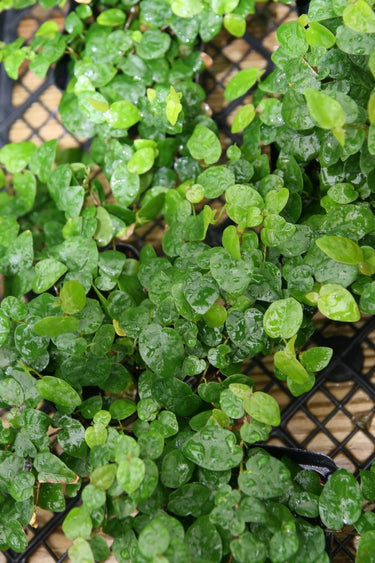
Figvine is very unlike the common edible fig (Ficus carica). This evergreen climber wears small, fingernail-sized rounded leaves and is most often seen scaling masonry walls, where a fringe of tiny aerial rootlets grips the roughest stone and brick. Given time, the creeping fig will trace a wall in intricate green patterns or blanket the surface entirely in a flat, dense sheet, one of the finest self-clinging covers for a shaded or partly shaded wall in a warm garden.
The plant leads a curious double life. In youth the growth is fine and flat, all small heart-shaped leaves pressed close to the wall, but as the stems gain height and age the character changes: mature shoots stand out from the surface on short woody branches and carry much larger, leathery, blunt-tipped adult leaves, and only then do the small, hard, inedible figs appear. Gardeners who want the delicate juvenile look forever simply cut the old growth back before the shrubby adult stage takes hold.
Native to eastern Asia and long grown across the southern United States, the creeping fig has an ethnobotanical cousin worth knowing. A Taiwanese variety, Ficus pumila var. awkeotsang, bears seeds that release a natural pectin when rubbed in water, setting into the cool amber aiyu jelly beloved in the night markets of Taiwan and Singapore. The ornamental creeping fig offered here is grown for foliage rather than the table, since the figs of the plain species are not eaten, but the family likeness is a pleasant thing to carry in mind.
In the garden the creeping fig is as useful as anything grown, softening walls, chimneys, and courtyard corners, spilling from raised beds, or knitting into a fine glossy groundcover in shade. Vigor is the one caution: the clinging rootlets can mar soft mortar and the plant will travel far, so choose a surface with room to run or keep the growth clipped and stand ready with the shears. Evergreen and fast in zones 8 to 11, happy in full sun to part shade and any soil that drains, the creeping fig also takes beautifully to topiary frames and bonsai, the small leaves lending themselves to patient shaping.
Photos courtesy of Jim Robbins and David Stang.
- Hardiness
- USDA Zones 8–11
- Sun
- Full Sun, Part Shade
- Soil
- Well-drained, Fertile
- Mature size
- Height 10–15 Feet
- Growth rate
- Fast
- Seasonality
- Evergreen
From rooting to shipping, our top priority is ensuring you receive healthy, thriving plants for your garden’s success.
Because most of our plants are grown from rooted cuttings — alongside seed, air layering, and grafting chosen for each variety — you receive a stronger, true-to-type plant that establishes quickly in your garden.
Raised on organic soil blends and eco-friendly pest management — never harsh chemicals — your plant arrives healthy for your garden, your family, and the pollinators they feed.
Every purchase gives back. We donate to the Aiken Arboretum and support local wildlife conservation, so growing your garden helps protect the wider ecosystem too.

All our plant material is carefully propagated, grown, and nurtured at our humble nursery in Aiken, South Carolina.

Your plant arrives carefully packed and ready to settle in. Unpack them promptly, give them a day or two to acclimate, then plant following the notes we include — that’s all it takes. Clear care guidance comes with every order, so success is the easy part.
What to expect upon delivery
All our plants are sold in 1-gallon sizes, though the height of each plant can vary depending on its growth rate and seasonality, typically ranging from 1/2 to 2.5 feet.
Each plant is carefully packaged with its roots enclosed in a secure plastic bag containing moist soil, forming a compact root ball. To ensure safe transport, the box is padded with recycled newspaper, providing both stability and eco-friendly protection from weather during shipping.
What is your return policy?
Review our full return policy information on our SHIPPING AND RETURNS POLICY page.
What payment methods can I use?
We offer 35 different payment methods including major providers like Mastercard, Visa, PayPal, American Express and Diners as well as many different local payment methods including Klarna, iDEAL, AliPay, Sofort, giropay, and many more.
Can I make changes to my order after it’s been placed?
At Woodlanders, we strive to fulfill orders as quickly as possible. Therefore, we can only accommodate changes to your order within the first 24 hours after it has been placed. These changes include adding or removing products and modifying the delivery address. If you need to make any changes or if there has been a mistake with your order information, please reach out to us promptly via our CONTACT page with your order number for the quickest resolution.
Your satisfaction is our priority, and we appreciate your understanding and cooperation.