



Sweetbay
Magnolia virginiana var. virginiana
Pickup currently unavailable at Aiken Nursery
There is something quietly instructive about the range of Magnolia virginiana. The species runs from the cold, swampy woods of Gloucester, Massachusetts, where a small population clings to the northern edge of the natural territory, all the way down to the Gulf Coast of Texas, a span of climate and geography that would seem to demand two entirely different plants. In the North the sweetbay obliges by turning deciduous, multi-stemmed, and compact, staying modest in deference to the winters. In the South the same species becomes something else entirely, a tall, evergreen tree of real stature. Botanists eventually gave the northern form a name of its own, var. virginiana, and that is what Woodlanders grows here, raised from seed collected at the Massachusetts limit of the range.
The sweetbay carries a distinction few American trees can claim: the honor of being the first magnolia known to European gardens. In 1688 the missionary and naturalist John Banister sent a plant from Virginia to Henry Compton, the Bishop of London, and the tree took root in cultivation abroad before the genus Magnolia even had a name, which Charles Plumier would coin only later from a species on Martinique. More than three centuries on, the sweetbay remains as much a garden treasure as a botanical footnote.
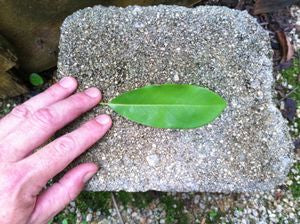
The flowers arrive in early summer, and then keep arriving, since the sweetbay blooms in succession over several weeks rather than all at once, so the fragrance becomes a sustained presence rather than a single event. The blooms are modest in size, two to three inches across, creamy white, and carry a lemon-cream scent that travels surprisingly far on warm air. The undersides of the leaves are a glaucous, chalky white that catches light differently from the glossy dark green above, so in a breeze the whole canopy seems to shimmer.
The sweetbay also has a long history of use. Native Americans and colonial settlers steeped the aromatic bark to bring down fevers and ease rheumatism, and turned the fruit to coughs and chest complaints, while beavers gnaw the wood so readily that the old names beaver tree and castorwood stuck. In the garden the tree earns a place other magnolias would refuse: tolerant of wet soils, boggy ground, and heavy clay, yet adaptable to ordinary garden conditions once established. In the North the sweetbay stays compact and shrubby; in warmer zones the same tree pushes toward a small multi-stemmed specimen. Either way the fragrance alone makes the case.
- Hardiness
- USDA Zones 5–9
- Sun
- Full Sun, Part Shade
- Soil
- Moist
- Mature size
- Height 20–40 Feet · Spread 15–20 Feet
- Growth rate
- Fast
- Seasonality
- Deciduous
These statements have not been evaluated by the Food and Drug Administration. This information is shared for traditional and educational interest only and is not intended to diagnose, treat, cure, or prevent any disease. Please consult a qualified healthcare professional before any medicinal use.
- Traditional use only; not a substitute for medical care
From rooting to shipping, our top priority is ensuring you receive healthy, thriving plants for your garden’s success.
Because most of our plants are grown from rooted cuttings — alongside seed, air layering, and grafting chosen for each variety — you receive a stronger, true-to-type plant that establishes quickly in your garden.
Raised on organic soil blends and eco-friendly pest management — never harsh chemicals — your plant arrives healthy for your garden, your family, and the pollinators they feed.
Every purchase gives back. We donate to the Aiken Arboretum and support local wildlife conservation, so growing your garden helps protect the wider ecosystem too.

All our plant material is carefully propagated, grown, and nurtured at our humble nursery in Aiken, South Carolina.

Your plant arrives carefully packed and ready to settle in. Unpack them promptly, give them a day or two to acclimate, then plant following the notes we include — that’s all it takes. Clear care guidance comes with every order, so success is the easy part.
What to expect upon delivery
All our plants are sold in 1-gallon sizes, though the height of each plant can vary depending on its growth rate and seasonality, typically ranging from 1/2 to 2.5 feet.
Each plant is carefully packaged with its roots enclosed in a secure plastic bag containing moist soil, forming a compact root ball. To ensure safe transport, the box is padded with recycled newspaper, providing both stability and eco-friendly protection from weather during shipping.
What is your return policy?
Review our full return policy information on our SHIPPING AND RETURNS POLICY page.
What payment methods can I use?
We offer 35 different payment methods including major providers like Mastercard, Visa, PayPal, American Express and Diners as well as many different local payment methods including Klarna, iDEAL, AliPay, Sofort, giropay, and many more.
Can I make changes to my order after it’s been placed?
At Woodlanders, we strive to fulfill orders as quickly as possible. Therefore, we can only accommodate changes to your order within the first 24 hours after it has been placed. These changes include adding or removing products and modifying the delivery address. If you need to make any changes or if there has been a mistake with your order information, please reach out to us promptly via our CONTACT page with your order number for the quickest resolution.
Your satisfaction is our priority, and we appreciate your understanding and cooperation.