


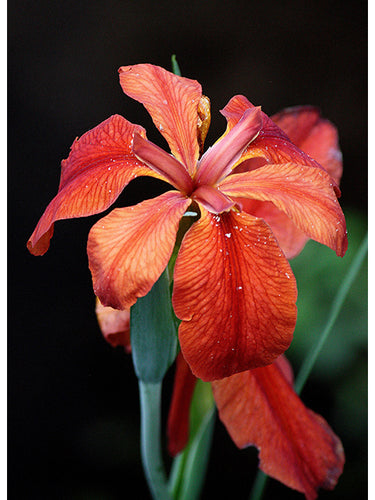

Copper Iris
Iris fulva
Pickup currently unavailable at Aiken Nursery
Among the wild irises of North America, Iris fulva is the one that broke the color rules. Where the family runs to blues, purples, and yellows, the copper iris opens in warm coppery red to burnt orange, a shade no other native iris offers, carried on slender stems in late spring and early summer with a soft, slightly drooping poise. The Latin fulva, meaning tawny or reddish-brown, records that unusual color, and the common names, copper iris and red iris, say the same thing more plainly.
First described in the early nineteenth century, Iris fulva belongs to the small group of five species known as the Louisiana irises, native to the swamps, ditches, and floodplains of the Deep South and the lower Mississippi valley, from Louisiana north to southeastern Missouri and southern Illinois. That singular red pigment made the copper iris invaluable to plant breeders, since crossing the species into the other Louisiana irises is how red and copper first entered the modern hybrids. One of the earliest such crosses, W. R. Dykes's 'Fulvala', paired the copper iris with the blue Iris brevicaulis and helped launch the whole hybrid race.
The color is not for show alone. Unlike most irises, which court bees, Iris fulva is pollinated chiefly by hummingbirds, and the ruby-throated hummingbird works the red flowers for nectar as the blooms open in early summer. That partnership ties the plant to the seasonal rhythm of the southern wetlands, where the copper iris grows in ground that floods and recedes with the year. Those same wetlands are now much reduced by drainage and development, so the wild populations have thinned, and growing a nursery-raised plant is a small way of keeping a diminishing native in cultivation.
In the garden the copper iris asks for the wet feet most perennials refuse, thriving at a pond or stream edge, in a rain garden, in a bog bed, or in any sunny to lightly shaded border kept reliably moist, and taking even standing water in stride. The two to three foot stems rise well above the fans of sword-shaped leaves, so the coppery flowers read from a distance and draw hummingbirds close. Pair the plant with other moisture lovers such as Louisiana iris hybrids, swamp hibiscus, canna, and native sedges, mass a few for the fullest effect, and divide the rhizomes every few years to keep a colony vigorous.
- Hardiness
- USDA Zones 4–9
- Sun
- Full Sun, Part Shade
- Soil
- Moist, Well-drained
- Mature size
- Height 2–3 Feet · Spread 1–2 Feet
- Growth rate
- Moderate
- Seasonality
- Deciduous
From rooting to shipping, our top priority is ensuring you receive healthy, thriving plants for your garden’s success.
Because most of our plants are grown from rooted cuttings — alongside seed, air layering, and grafting chosen for each variety — you receive a stronger, true-to-type plant that establishes quickly in your garden.
Raised on organic soil blends and eco-friendly pest management — never harsh chemicals — your plant arrives healthy for your garden, your family, and the pollinators they feed.
Every purchase gives back. We donate to the Aiken Arboretum and support local wildlife conservation, so growing your garden helps protect the wider ecosystem too.

All our plant material is carefully propagated, grown, and nurtured at our humble nursery in Aiken, South Carolina.

Your plant arrives carefully packed and ready to settle in. Unpack them promptly, give them a day or two to acclimate, then plant following the notes we include — that’s all it takes. Clear care guidance comes with every order, so success is the easy part.
What to expect upon delivery
All our plants are sold in 1-gallon sizes, though the height of each plant can vary depending on its growth rate and seasonality, typically ranging from 1/2 to 2.5 feet.
Each plant is carefully packaged with its roots enclosed in a secure plastic bag containing moist soil, forming a compact root ball. To ensure safe transport, the box is padded with recycled newspaper, providing both stability and eco-friendly protection from weather during shipping.
What is your return policy?
Review our full return policy information on our SHIPPING AND RETURNS POLICY page.
What payment methods can I use?
We offer 35 different payment methods including major providers like Mastercard, Visa, PayPal, American Express and Diners as well as many different local payment methods including Klarna, iDEAL, AliPay, Sofort, giropay, and many more.
Can I make changes to my order after it’s been placed?
At Woodlanders, we strive to fulfill orders as quickly as possible. Therefore, we can only accommodate changes to your order within the first 24 hours after it has been placed. These changes include adding or removing products and modifying the delivery address. If you need to make any changes or if there has been a mistake with your order information, please reach out to us promptly via our CONTACT page with your order number for the quickest resolution.
Your satisfaction is our priority, and we appreciate your understanding and cooperation.