

Very Rare

Blueberry Leaf Fig

Ficus vaccinioides

$21.00
USDA Zones 7–9 Full Sun and Part Shade Matures 6–12 Inches

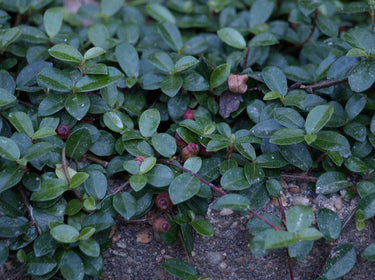
Ficus vaccinioides, the blueberry-leaf fig, is a rare creeping fig that stays low and well-mannered, laying down a dense, glossy evergreen carpet that looks uncannily like an evergreen blueberry.

4 in stock

Pickup available at Aiken Nursery

Usually ready in 2-4 days

Healthy-arrival guarantee Free shipping over $150
Roots wrapped in moist soil and padded for safe transit
Grown and shipped from our nursery in Aiken, SC
Shipping later in the season? Schedule your delivery date in your cart.

The Latin gives away the joke before you have even seen the plant. Ficus vaccinioides, the Formosan creeping fig, is a fig that has decided to impersonate a blueberry: vaccinioides means resembling Vaccinium, and the small, glossy, obovate leaves running close along reddish stems really could pass for an evergreen huckleberry. They are no relation at all. They are a true fig, latex and all, just one that has shrunk to a few inches tall and given up any ambition of climbing.

That last part is what sets them apart from the creeping fig everyone knows. Ficus pumila will swallow a wall; this one stays low and well-mannered, mounding and trailing into a dense, fine-textured evergreen carpet, rooting as it goes but never scaling anything it should not. The effect is quiet and faintly luxurious, the kind of restrained sheen that reads as intentional in a way few groundcovers manage. They are equally at home spilling from a container, softening the edge of a shaded bed, or threading over the face of a low wall.

They come from the littoral thickets of southern Taiwan, and they are tougher than the delicate look suggests: notably more cold-hardy than most figs, holding evergreen through mild winters and proven at the JC Raulston Arboretum up in Zone 7, where in a sheltered spot they take hard cold by dropping their leaves and returning from the root. That toughness is, in fact, how they reached us. This is a plant that traveled, carried along by collectors who recognized something worth keeping: out of Yucca Do Nursery in Texas, on to Riverbanks Botanical Garden in Columbia, into the collections at the JC Raulston Arboretum at NC State, and at last to Aiken. The finest plants often arrive by exactly this kind of roundabout, hand-to-hand route, which is usually a sign they were worth the trip.

A choice, collectable little thing, sterile and undemanding, asking only for part shade to sun and a soil that drains. Ficus vaccinioides will not shout for attention. They will simply make everything around them look considered.

Photo courtesy of the JC Raulston Arboretum

Will this plant thrive in your zone?

Plant Profile
At a glance
Hardiness
USDA Zones 7–9
Sun
Full Sun, Part Shade
Soil
Well-drained
Mature size
Height 6–12 Inches · Spread 2–3 Feet
Growth rate
Fast
Seasonality
Semi-Evergreen
Design Notes

Think of Ficus vaccinioides as a finishing layer rather than a feature. They don't flower for show or draw the eye on their own; what they do is make everything they touch look more considered, a low, even, glossy carpet that reads as deliberate where bare soil or mulch reads as unfinished. Use them the way you'd use good trim.

On the ground they knit into a dense, fine-textured cover for the front of a shaded bed, the gaps between stepping stones, or the awkward apron beneath larger shrubs where coarser groundcovers look heavy. Because they mound and creep rather than climb, they stay where you put them, no small mercy if you've ever fought the wall-swallowing habit of common creeping fig. Against a low wall or the lip of a raised bed they're at their best, trailing over the edge in a thin, glossy sheet that softens stone without burying it. They also take kindly to the patient art of topiary and bonsai, if you're inclined; the small leaves and rooting stems were practically made for training over a form.

The container is where they earn their keep for most growers, and for good reason. Spilling over the rim of a good pot, they bring that quiet blueberry-leaf sheen up to eye level where it can be appreciated, and a pot is also the simplest way to grow them at the cold edge of their range, since it can move to shelter when hard frost threatens. Evergreen through mild winters and root-hardy into Zone 7 in a protected spot, they're forgiving either way; just give them part shade to sun and soil that drains, and they'll hold their looks with almost no intervention.

One practical note for container growers, since this plant ends up close to hand: like all figs, broken stems weep a milky latex that can irritate skin, and the foliage is best kept away from pets inclined to chew. Nothing to fear, simply worth knowing when you're siting a plant you'll brush past daily. Place them where their restraint can do its quiet work, and Ficus vaccinioides will give a garden the one thing hardest to buy: the look of having been finished by someone who knew when to stop.

Flower, Fruit & Foliage

Inconspicuous; tiny figs in summer

Flowers:
There are flowers, technically, but you will never see them, and that's true of every fig. What looks like a fruit on any Ficus is actually the flowers turned outside-in, a hollow vessel called a syconium with the tiny blooms hidden entirely inside, pollinated in the wild by a single species of fig wasp that crawls in to do the work. No wasp, no real flowering display, just the small green starts of figs appearing along the stems in summer. On this plant the bloom is a closed secret, which is exactly how the family likes it.

Fruit:
Here is the quiet delight. Being a genuine fig, they set genuine figs, just very, very small ones, round green beads scattered along the trailing stems, ripening dark, charming and entirely out of proportion to any culinary ambition. As one grower put it, you'd need an awful lot of them to make figgy pudding. Without their native pollinating wasp they stay tiny and sterile here, which is no loss at all: the fruit is a curiosity and a conversation piece, the smallest fig you're likely ever to grow, not a crop. Look closely and you'll find them; that's rather the point.

Foliage:
The foliage is the whole reason to grow them, and it's beautifully understated. Small, glossy, obovate leaves, deep green and faintly leathery, carried densely along slender reddish-brown stems that root where they touch the ground. The resemblance to an evergreen blueberry is uncanny and the source of both the Latin name and the nickname "creeping blueberry fig," though the two plants share nothing but a look. The texture is fine and even, the sheen quiet rather than waxy, and it holds year-round where winters are mild, giving a low, refined, carpet-like cover that flatters whatever it's planted against. Break a stem and you'll meet the family's other signature: a bead of milky fig latex, proof of exactly what they are under the blueberry disguise.

Care

Read our full care guide

Light. Part shade to full sun; happy in either, with the sheen best in a little shade.

Soil. Any soil that drains, enriched with compost, and kept steadily moist while establishing.

Water. Moderate and regular; the shallow, rooting stems dislike prolonged drought.

Pruning. Shear or pinch any time to shape, to hold as a carpet, or to train over a topiary form or bonsai.

Hardiness. Evergreen in mild winters and root-hardy to about USDA zone 7 in a sheltered spot, dropping leaves in hard cold and returning from the root.

Here’s a closer look at how we produce our plants

From rooting to shipping, our top priority is ensuring you receive healthy, thriving plants for your garden’s success.

Woodlanders Growing Process

Because most of our plants are grown from rooted cuttings — alongside seed, air layering, and grafting chosen for each variety — you receive a stronger, true-to-type plant that establishes quickly in your garden.

Sustainable Growing Practices

Raised on organic soil blends and eco-friendly pest management — never harsh chemicals — your plant arrives healthy for your garden, your family, and the pollinators they feed.

Supporting Local Biodiversity

Every purchase gives back. We donate to the Aiken Arboretum and support local wildlife conservation, so growing your garden helps protect the wider ecosystem too.

At Woodlanders, we are committed to quality.
Grown in Aiken, South Carolina
At Woodlanders, we are committed to quality.

All our plant material is carefully propagated, grown, and nurtured at our humble nursery in Aiken, South Carolina.

Learn more about Woodlanders
Healthy plants, ready to thrive
Success, made simple
Healthy plants, ready to thrive

Your plant arrives carefully packed and ready to settle in. Unpack them promptly, give them a day or two to acclimate, then plant following the notes we include — that’s all it takes. Clear care guidance comes with every order, so success is the easy part.

Read the care guide
Frequently Asked Questions
What to expect upon delivery

All our plants are sold in 1-gallon sizes, though the height of each plant can vary depending on its growth rate and seasonality, typically ranging from 1/2 to 2.5 feet.

Each plant is carefully packaged with its roots enclosed in a secure plastic bag containing moist soil, forming a compact root ball. To ensure safe transport, the box is padded with recycled newspaper, providing both stability and eco-friendly protection from weather during shipping.

What is your return policy?

Review our full return policy information on our SHIPPING AND RETURNS POLICY page.

What payment methods can I use?

We offer 35 different payment methods including major providers like Mastercard, Visa, PayPal, American Express and Diners as well as many different local payment methods including Klarna, iDEAL, AliPay, Sofort, giropay, and many more.

Can I make changes to my order after it’s been placed?

At Woodlanders, we strive to fulfill orders as quickly as possible. Therefore, we can only accommodate changes to your order within the first 24 hours after it has been placed. These changes include adding or removing products and modifying the delivery address. If you need to make any changes or if there has been a mistake with your order information, please reach out to us promptly via our CONTACT page with your order number for the quickest resolution.

Your satisfaction is our priority, and we appreciate your understanding and cooperation.