




Great Blue Lobelia
Lobelia siphilitica
Pickup currently unavailable at Aiken Nursery
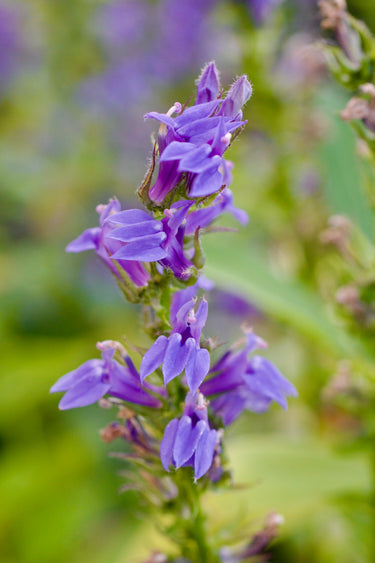
Where the cardinal flower runs to scarlet, Lobelia siphilitica answers in blue. The great blue lobelia sends up leafy spikes packed with inch-long, two-lipped flowers of clear, saturated blue in late summer and early fall, one of the truest blues in the native flora and a gift to the garden at a tired time of year. The species grows wild across eastern and central North America in moist meadows, low woods, and along streamsides.
Like the cardinal flower, great blue lobelia belongs to the bellflower family, Campanulaceae, and the genus honors the Flemish botanist Matthias de Lobel. The startling epithet siphilitica preserves a piece of medical history: the botanist John Bartram, learning the practice from Native peoples to the north, described the ground root in his eighteenth-century Medicina Britannica as a cure for syphilis. That reputation carried the plant to Europe and into the botanical name, though the cure was later shown to be entirely ineffective, a cautionary tale now fossilized in Latin.
Native American peoples did use the plant more soundly for respiratory and muscular complaints, but great blue lobelia, like the whole genus, holds toxic alkaloids related to nicotine and is not safe to eat. Grow the plant for beauty and for wildlife rather than the medicine chest, and site the clump where children and pets will not be tempted. The compensation is generous: bees, butterflies, and hummingbirds all work the blue spikes for nectar through the season's end.
Great blue lobelia is easygoing wherever the soil stays moist, thriving in sun to part shade at a pond edge, in a rain garden, or along a shaded woodland border. The plant is naturally short-lived but self-sows gently in agreeable spots, and a simple division every few years keeps a colony vigorous. Pair the blue with the scarlet of cardinal flower, the gold of goldenrod, and the white of turtlehead for a late-season, pollinator-thronged planting that thrives in the damp ground where many perennials sulk. Deer and rabbits, put off by the bitter foliage, leave the plants alone.
- Hardiness
- USDA Zones 4–8
- Sun
- Full Sun, Part Shade
- Soil
- Moist, Well-drained, Rich
- Mature size
- Height 2–3 Feet · Spread 1–2 Feet
- Growth rate
- Moderate
- Seasonality
- Dies back, depends on zone
Clear blue, two-lipped flowers on upright spikes, late summer to early fall
From rooting to shipping, our top priority is ensuring you receive healthy, thriving plants for your garden’s success.
Because most of our plants are grown from rooted cuttings — alongside seed, air layering, and grafting chosen for each variety — you receive a stronger, true-to-type plant that establishes quickly in your garden.
Raised on organic soil blends and eco-friendly pest management — never harsh chemicals — your plant arrives healthy for your garden, your family, and the pollinators they feed.
Every purchase gives back. We donate to the Aiken Arboretum and support local wildlife conservation, so growing your garden helps protect the wider ecosystem too.

All our plant material is carefully propagated, grown, and nurtured at our humble nursery in Aiken, South Carolina.

Your plant arrives carefully packed and ready to settle in. Unpack them promptly, give them a day or two to acclimate, then plant following the notes we include — that’s all it takes. Clear care guidance comes with every order, so success is the easy part.
What to expect upon delivery
All our plants are sold in 1-gallon sizes, though the height of each plant can vary depending on its growth rate and seasonality, typically ranging from 1/2 to 2.5 feet.
Each plant is carefully packaged with its roots enclosed in a secure plastic bag containing moist soil, forming a compact root ball. To ensure safe transport, the box is padded with recycled newspaper, providing both stability and eco-friendly protection from weather during shipping.
What is your return policy?
Review our full return policy information on our SHIPPING AND RETURNS POLICY page.
What payment methods can I use?
We offer 35 different payment methods including major providers like Mastercard, Visa, PayPal, American Express and Diners as well as many different local payment methods including Klarna, iDEAL, AliPay, Sofort, giropay, and many more.
Can I make changes to my order after it’s been placed?
At Woodlanders, we strive to fulfill orders as quickly as possible. Therefore, we can only accommodate changes to your order within the first 24 hours after it has been placed. These changes include adding or removing products and modifying the delivery address. If you need to make any changes or if there has been a mistake with your order information, please reach out to us promptly via our CONTACT page with your order number for the quickest resolution.
Your satisfaction is our priority, and we appreciate your understanding and cooperation.