




Fetterbush
Lyonia lucida
Pickup available at Aiken Nursery
Usually ready in 2-4 days
Lyonia lucida, the fetterbush, is one of the quiet evergreen pleasures of the Southeastern wetlands, a shrub of upright, arching stems clothed in glossy, leathery leaves. Look closely and each smooth leaf shows a fine vein running just inside the margin, a neat identifying mark, and the species name lucida, Latin for shining, salutes that polished surface. The common name comes from the dense, tangling thickets the shrub forms in the wild, said to fetter anyone trying to walk through.
Fetterbush belongs to the heath family, Ericaceae, alongside blueberries, azaleas, and mountain laurel, and the genus Lyonia honors John Lyon, the intrepid Scottish-American plant collector who botanized the southern Appalachians in the early nineteenth century. The species grows wild from Virginia south through Florida and west to Louisiana, in acidic pine flatwoods, bogs, and pocosins where the soil stays damp. As with other members of the heath family, the foliage carries grayanotoxins and is not for grazing, which is part of why deer leave the shrub alone.
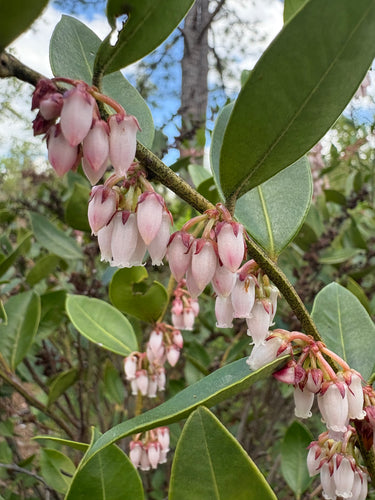
In late winter and spring the leaf axils hang with clusters of small, waxy, bell-shaped flowers in shades of white to clear pink, nodding beneath the branches and mildly sweet, an early nectar source for bees. The bloom is understated but charming at close range, and the glossy evergreen foliage carries the shrub handsomely through the rest of the year, dense and tidy, with a coppery cast to the new growth.
Fetterbush is made for the moist, acidic, part-shaded situations where so many good things refuse to grow: a rain garden, a pond edge, a damp woodland border, or the understory beneath pines. Pair the shrub with azaleas, blueberries, and native hollies for an acid-loving, wildlife-friendly planting. Given consistent moisture and a pine-needle mulch, the plant is close to carefree; a hard cut in early spring thickens an open specimen and keeps the arching habit shapely.
Photos taken by Jonas Meyer near the Ohoopee River
- Hardiness
- USDA Zones 7–10
- Sun
- Part Shade, Full Sun
- Soil
- Well-drained, Acid, Rich
- Mature size
- Height 6–8 Feet · Spread 3–4 Feet
- Growth rate
- Moderate
- Seasonality
- Evergreen
Small, waxy, white to pink bell-shaped flowers, late winter to spring
From rooting to shipping, our top priority is ensuring you receive healthy, thriving plants for your garden’s success.
Because most of our plants are grown from rooted cuttings — alongside seed, air layering, and grafting chosen for each variety — you receive a stronger, true-to-type plant that establishes quickly in your garden.
Raised on organic soil blends and eco-friendly pest management — never harsh chemicals — your plant arrives healthy for your garden, your family, and the pollinators they feed.
Every purchase gives back. We donate to the Aiken Arboretum and support local wildlife conservation, so growing your garden helps protect the wider ecosystem too.

All our plant material is carefully propagated, grown, and nurtured at our humble nursery in Aiken, South Carolina.

Your plant arrives carefully packed and ready to settle in. Unpack them promptly, give them a day or two to acclimate, then plant following the notes we include — that’s all it takes. Clear care guidance comes with every order, so success is the easy part.
What to expect upon delivery
All our plants are sold in 1-gallon sizes, though the height of each plant can vary depending on its growth rate and seasonality, typically ranging from 1/2 to 2.5 feet.
Each plant is carefully packaged with its roots enclosed in a secure plastic bag containing moist soil, forming a compact root ball. To ensure safe transport, the box is padded with recycled newspaper, providing both stability and eco-friendly protection from weather during shipping.
What is your return policy?
Review our full return policy information on our SHIPPING AND RETURNS POLICY page.
What payment methods can I use?
We offer 35 different payment methods including major providers like Mastercard, Visa, PayPal, American Express and Diners as well as many different local payment methods including Klarna, iDEAL, AliPay, Sofort, giropay, and many more.
Can I make changes to my order after it’s been placed?
At Woodlanders, we strive to fulfill orders as quickly as possible. Therefore, we can only accommodate changes to your order within the first 24 hours after it has been placed. These changes include adding or removing products and modifying the delivery address. If you need to make any changes or if there has been a mistake with your order information, please reach out to us promptly via our CONTACT page with your order number for the quickest resolution.
Your satisfaction is our priority, and we appreciate your understanding and cooperation.