



White Oak
Quercus alba 'Grandchildren of Wye Oak'
Pickup available at Aiken Nursery
Usually ready in 2-4 days
These are the grandchildren of a legend. The Wye Oak of Wye Mills, Maryland, was the greatest white oak in the country, a single tree that stood more than four hundred and sixty years and served as Maryland's state tree until a storm finally brought the giant down in 2002. Quercus alba 'Grandchildren of Wye Oak' are seedling-grown descendants of that famous tree, carrying the bloodline of an American icon into gardens that have room for the long view.
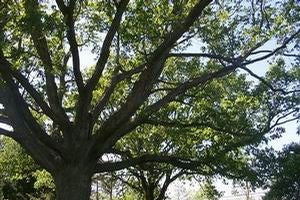
White oak is the grandfather of the eastern forest, a slow, massive, immensely long-lived tree with a broad, rounded crown, pale flaky ash-gray bark, and deeply lobed blue-green leaves that turn russet and wine-red in fall. The rounded-lobed leaf is so emblematic of the American hardwood forest that The Nature Conservancy took the white oak leaf for its logo. Given room, these trees build the kind of spreading, cathedral canopy that shades generations.
No native tree has given more. White oak acorns are among the sweetest of the oaks, low enough in tannin that Native peoples across the East gathered, leached, and ground them into meal, and the acorns still feed deer, turkeys, squirrels, and jays every fall. The tannin-rich inner bark was one of the great astringents of Native American and settler herbalism, and the tight-grained, watertight timber built ships, barrels, and bourbon casks. A fuller account of the traditional medicinal uses appears in the notes below.
In the garden, plant these trees for the century, not the season, on an open, sunny site with deep, well-drained, slightly acid soil and room for a slow oak that can reach eighty feet and spread as wide. White oak resents having the roots disturbed once established, so choose the spot with care and let the roots settle undisturbed; underplant only at the outer dripline. To plant a grandchild of the Wye Oak is to hand the next generation a tree with a story already attached.
- Hardiness
- USDA Zones 3–9
- Sun
- Full Sun, Part Shade
- Soil
- Well-drained
- Mature size
- Height 60–80 Feet · Spread 60–80 Feet
- Growth rate
- Slow
- Seasonality
- Deciduous
References & research
These statements have not been evaluated by the Food and Drug Administration. This information is shared for traditional and educational interest only and is not intended to diagnose, treat, cure, or prevent any disease. Please consult a qualified healthcare professional before any medicinal use.
- High tannin content; internal use in excess can upset digestion and hinder nutrient and drug absorption
- Not for prolonged internal use
- Seek professional guidance before any medicinal use
From rooting to shipping, our top priority is ensuring you receive healthy, thriving plants for your garden’s success.
Because most of our plants are grown from rooted cuttings — alongside seed, air layering, and grafting chosen for each variety — you receive a stronger, true-to-type plant that establishes quickly in your garden.
Raised on organic soil blends and eco-friendly pest management — never harsh chemicals — your plant arrives healthy for your garden, your family, and the pollinators they feed.
Every purchase gives back. We donate to the Aiken Arboretum and support local wildlife conservation, so growing your garden helps protect the wider ecosystem too.

All our plant material is carefully propagated, grown, and nurtured at our humble nursery in Aiken, South Carolina.

Your plant arrives carefully packed and ready to settle in. Unpack them promptly, give them a day or two to acclimate, then plant following the notes we include — that’s all it takes. Clear care guidance comes with every order, so success is the easy part.
What to expect upon delivery
All our plants are sold in 1-gallon sizes, though the height of each plant can vary depending on its growth rate and seasonality, typically ranging from 1/2 to 2.5 feet.
Each plant is carefully packaged with its roots enclosed in a secure plastic bag containing moist soil, forming a compact root ball. To ensure safe transport, the box is padded with recycled newspaper, providing both stability and eco-friendly protection from weather during shipping.
What is your return policy?
Review our full return policy information on our SHIPPING AND RETURNS POLICY page.
What payment methods can I use?
We offer 35 different payment methods including major providers like Mastercard, Visa, PayPal, American Express and Diners as well as many different local payment methods including Klarna, iDEAL, AliPay, Sofort, giropay, and many more.
Can I make changes to my order after it’s been placed?
At Woodlanders, we strive to fulfill orders as quickly as possible. Therefore, we can only accommodate changes to your order within the first 24 hours after it has been placed. These changes include adding or removing products and modifying the delivery address. If you need to make any changes or if there has been a mistake with your order information, please reach out to us promptly via our CONTACT page with your order number for the quickest resolution.
Your satisfaction is our priority, and we appreciate your understanding and cooperation.