


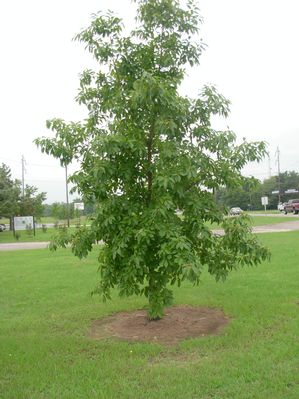

Chinquapin Oak
Quercus muehlenbergii
In propagation
Currently growing out 1 Gallon pots. Expected Spring 2027.
Add your name with the notify button below, and we will email you the moment this plant is ready to bring home.
Learn how we grow on The Prop House.
Pickup currently unavailable at Aiken Nursery
This oak carries the name of a Pennsylvania parson. Gotthilf Heinrich Ernst Muhlenberg was a Lutheran minister who botanized on the side, thoroughly enough that the German-American botanist George Engelmann named the species for him, and then misspelled it: Engelmann set an umlaut over the u that Muhlenberg never used, and the rules of botanical naming have fossilized the slip ever since, transliterating it into the tongue-twisting muehlenbergii we are stuck with.
The common name is older and kinder. Chinquapin is the chestnut family's word for a small sweet nut, and this oak wears chestnut-shaped leaves, glossy and coarsely toothed and pale beneath, to go with acorns that are themselves among the sweetest in the genus, edible nearly off the tree where most oaks need leaching to be borne.
What sets chinquapin oak apart from almost every other oak is a taste in ground. This is a limestone tree, happiest on sweet, alkaline, rocky soil where the acid-loving oaks turn sickly and yellow, which makes the species the answer to a question most growers cannot otherwise solve. The tree builds slowly into a medium oak with an open, rounded crown and ashy, flaky, white-oak bark good to look at all winter.
Give chinquapin oak sun and a soil that leans alkaline, and the tree will quietly thrive where the others cannot: a specimen or shade tree for a limestone or high-pH lawn, a park, a street, or a naturalistic native planting on sweet, rocky ground. Full sun brings the best form; pair with other lime-tolerant natives, allow room for a broad, rounded, forty- to sixty-foot crown, and let the sweet acorns feed the deer, turkey, and squirrels that seek them out.
- Hardiness
- USDA Zones 4–8
- Sun
- Full Sun, Part Shade
- Soil
- Well-drained
- Mature size
- Height 40–80 Feet · Spread 40–70 Feet
- Growth rate
- Slow
- Seasonality
- Deciduous
From rooting to shipping, our top priority is ensuring you receive healthy, thriving plants for your garden’s success.
Because most of our plants are grown from rooted cuttings — alongside seed, air layering, and grafting chosen for each variety — you receive a stronger, true-to-type plant that establishes quickly in your garden.
Raised on organic soil blends and eco-friendly pest management — never harsh chemicals — your plant arrives healthy for your garden, your family, and the pollinators they feed.
Every purchase gives back. We donate to the Aiken Arboretum and support local wildlife conservation, so growing your garden helps protect the wider ecosystem too.

All our plant material is carefully propagated, grown, and nurtured at our humble nursery in Aiken, South Carolina.

Your plant arrives carefully packed and ready to settle in. Unpack them promptly, give them a day or two to acclimate, then plant following the notes we include — that’s all it takes. Clear care guidance comes with every order, so success is the easy part.
What to expect upon delivery
All our plants are sold in 1-gallon sizes, though the height of each plant can vary depending on its growth rate and seasonality, typically ranging from 1/2 to 2.5 feet.
Each plant is carefully packaged with its roots enclosed in a secure plastic bag containing moist soil, forming a compact root ball. To ensure safe transport, the box is padded with recycled newspaper, providing both stability and eco-friendly protection from weather during shipping.
What is your return policy?
Review our full return policy information on our SHIPPING AND RETURNS POLICY page.
What payment methods can I use?
We offer 35 different payment methods including major providers like Mastercard, Visa, PayPal, American Express and Diners as well as many different local payment methods including Klarna, iDEAL, AliPay, Sofort, giropay, and many more.
Can I make changes to my order after it’s been placed?
At Woodlanders, we strive to fulfill orders as quickly as possible. Therefore, we can only accommodate changes to your order within the first 24 hours after it has been placed. These changes include adding or removing products and modifying the delivery address. If you need to make any changes or if there has been a mistake with your order information, please reach out to us promptly via our CONTACT page with your order number for the quickest resolution.
Your satisfaction is our priority, and we appreciate your understanding and cooperation.