




Franklin Tree
Franklinia altamaha
Pickup currently unavailable at Aiken Nursery
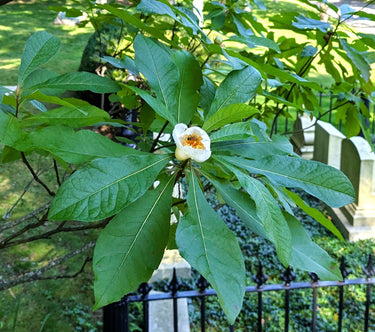
Few plants carry a story like the Franklin tree. Collected from the banks of the Altamaha River in Georgia by John and William Bartram in the 1760s and named by them for their friend Benjamin Franklin, Franklinia alatamaha was last seen growing wild around 1803 and has never been found in nature since. Every Franklinia alive today, in every garden and arboretum on earth, descends from the seed the Bartrams carried home to Philadelphia. To grow one is to hold a living piece of that lineage.
The tree earns a place on its own merits, history aside. In late summer and into fall, white, camellia-like flowers with a central boss of golden stamens open in succession, sweetly fragrant and three inches across, often while the foliage is already turning a deep, burnished crimson. Flower and fire together is a generosity few plants manage, and the show arrives in a season when most trees have long finished.
Franklinia belongs to the tea family, Theaceae, kin to the camellias and stewartias, and shares their taste for cool, acid, perfectly drained ground. The tree can be temperamental, resenting wet feet, heavy clay, and soil where cotton or other crops have left root-rot pathogens behind, so give a raised, humus-rich, freely draining bed, a little afternoon shade in the hottest climates, and the patience to let a slow plant settle.
We have grown Franklinia at Woodlanders for decades, and the growing never stops feeling like a privilege. Site the tree as a specimen where the late flowers and crimson fall color can be admired at close range, near a path, a patio, or a window framed for autumn, and pair with other acid-lovers such as camellias, azaleas, and stewartias. A rare and storied small tree for the collector willing to give it the drainage it demands.
- Hardiness
- USDA Zones 5–8
- Sun
- Full Sun, Part Shade
- Soil
- Well-drained
- Mature size
- Height 10–15 Feet · Spread 6–10 Feet
- Growth rate
- Slow
- Seasonality
- Deciduous
3 inches in diameter, white, fragrant, late summer
From rooting to shipping, our top priority is ensuring you receive healthy, thriving plants for your garden’s success.
Because most of our plants are grown from rooted cuttings — alongside seed, air layering, and grafting chosen for each variety — you receive a stronger, true-to-type plant that establishes quickly in your garden.
Raised on organic soil blends and eco-friendly pest management — never harsh chemicals — your plant arrives healthy for your garden, your family, and the pollinators they feed.
Every purchase gives back. We donate to the Aiken Arboretum and support local wildlife conservation, so growing your garden helps protect the wider ecosystem too.

All our plant material is carefully propagated, grown, and nurtured at our humble nursery in Aiken, South Carolina.

Your plant arrives carefully packed and ready to settle in. Unpack them promptly, give them a day or two to acclimate, then plant following the notes we include — that’s all it takes. Clear care guidance comes with every order, so success is the easy part.
What to expect upon delivery
All our plants are sold in 1-gallon sizes, though the height of each plant can vary depending on its growth rate and seasonality, typically ranging from 1/2 to 2.5 feet.
Each plant is carefully packaged with its roots enclosed in a secure plastic bag containing moist soil, forming a compact root ball. To ensure safe transport, the box is padded with recycled newspaper, providing both stability and eco-friendly protection from weather during shipping.
What is your return policy?
Review our full return policy information on our SHIPPING AND RETURNS POLICY page.
What payment methods can I use?
We offer 35 different payment methods including major providers like Mastercard, Visa, PayPal, American Express and Diners as well as many different local payment methods including Klarna, iDEAL, AliPay, Sofort, giropay, and many more.
Can I make changes to my order after it’s been placed?
At Woodlanders, we strive to fulfill orders as quickly as possible. Therefore, we can only accommodate changes to your order within the first 24 hours after it has been placed. These changes include adding or removing products and modifying the delivery address. If you need to make any changes or if there has been a mistake with your order information, please reach out to us promptly via our CONTACT page with your order number for the quickest resolution.
Your satisfaction is our priority, and we appreciate your understanding and cooperation.