


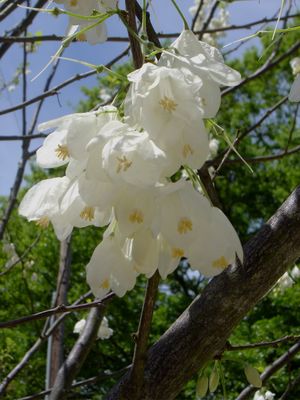

Large-Flowered Silverbell
Halesia diptera var. magniflora
Pickup currently unavailable at Aiken Nursery
Of all the silverbells, this is the one plant hunters remember. Halesia diptera var. magniflora is the large-flowered form of the two-wing silverbell, and the difference is not subtle: the white, bell-shaped flowers run half again larger than the type, sometimes an inch and more across, with the lobes cut so deeply that each bloom flares open like a little white star rather than a closed bell. In full flower, before the leaves are fully out, the branches all but vanish beneath them, and a mature specimen becomes a cloud of white in the April woods.
The variety name says exactly what the eye already knows. Magniflora is Latin for large-flowered, a fitting note under a genus named for Stephen Hales, the eighteenth-century scientist who pioneered the study of how water moves through plants, and a species named diptera, two-winged, for the pair of papery wings on the dry ripe fruit. Botanically this is still a two-wing silverbell; horticulturally the plant is the aristocrat of the group, the form that connoisseurs of native trees seek out and seldom find offered.
The wild range is narrow. This large-flowered variety grows native in a limited stretch of the Florida Panhandle and the neighboring Gulf Coast, along shaded bluffs and rich, moist ravines near the Apalachicola and other blackwater rivers, exactly the kind of cool, humus-rich, acid ground that produces so many of the region's botanical treasures. Scarcity in the wild is part of why the tree is rarely available in the trade, and part of why a garden-grown plant is worth the search.
Give this silverbell a semi-shaded, moist but well-drained site, and treat the tree as a spring-flowering understory specimen for a woodland edge, a shaded border, or a courtyard where the oversized bells can be looked up into from below. Plant among dogwoods, azaleas, rhododendrons, and ferns that share the same taste for cool, acid soil, shelter the crown from harsh afternoon sun in the Deep South, and let a yellow fall color close a season that began with the finest flowers the silverbells can offer.
- Hardiness
- USDA Zones 6–9
- Sun
- Full Sun, Part Shade
- Soil
- Well-drained, Moist
- Mature size
- Height 15–30 Feet · Spread 10–15 Feet
- Growth rate
- Moderate
- Seasonality
- Deciduous
Large clusters of bell-like, white, spring
From rooting to shipping, our top priority is ensuring you receive healthy, thriving plants for your garden’s success.
Because most of our plants are grown from rooted cuttings — alongside seed, air layering, and grafting chosen for each variety — you receive a stronger, true-to-type plant that establishes quickly in your garden.
Raised on organic soil blends and eco-friendly pest management — never harsh chemicals — your plant arrives healthy for your garden, your family, and the pollinators they feed.
Every purchase gives back. We donate to the Aiken Arboretum and support local wildlife conservation, so growing your garden helps protect the wider ecosystem too.

All our plant material is carefully propagated, grown, and nurtured at our humble nursery in Aiken, South Carolina.

Your plant arrives carefully packed and ready to settle in. Unpack them promptly, give them a day or two to acclimate, then plant following the notes we include — that’s all it takes. Clear care guidance comes with every order, so success is the easy part.
What to expect upon delivery
All our plants are sold in 1-gallon sizes, though the height of each plant can vary depending on its growth rate and seasonality, typically ranging from 1/2 to 2.5 feet.
Each plant is carefully packaged with its roots enclosed in a secure plastic bag containing moist soil, forming a compact root ball. To ensure safe transport, the box is padded with recycled newspaper, providing both stability and eco-friendly protection from weather during shipping.
What is your return policy?
Review our full return policy information on our SHIPPING AND RETURNS POLICY page.
What payment methods can I use?
We offer 35 different payment methods including major providers like Mastercard, Visa, PayPal, American Express and Diners as well as many different local payment methods including Klarna, iDEAL, AliPay, Sofort, giropay, and many more.
Can I make changes to my order after it’s been placed?
At Woodlanders, we strive to fulfill orders as quickly as possible. Therefore, we can only accommodate changes to your order within the first 24 hours after it has been placed. These changes include adding or removing products and modifying the delivery address. If you need to make any changes or if there has been a mistake with your order information, please reach out to us promptly via our CONTACT page with your order number for the quickest resolution.
Your satisfaction is our priority, and we appreciate your understanding and cooperation.