



Sweet Orange
Hamlin Sweet Orange
Pickup currently unavailable at Aiken Nursery
3-Gallon - Pick Up Only
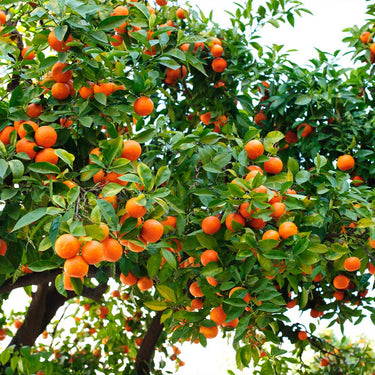
The Hamlin is the orange that starts the season. Among the earliest of the sweet oranges to ripen, the tree hangs the fruit gold by late fall and holds through midwinter, well ahead of the navels and Valencias. The oranges are medium-sized and smooth-skinned, nearly seedless, and light on the segment-eating pleasures of a navel, because the real gift is the juice: pale, abundant, and sweet, the classic breakfast-glass orange that helped make Florida famous.
The variety began, as so many great fruits do, as a single lucky seedling. In 1879 a seedling sweet orange came up in a grove near DeLand, Florida, on land later worked by Arthur George Hamlin, whose name the tree now carries. The Hamlin might have stayed a local curiosity but for the calamity of the Great Freeze of 1894 and 1895, which killed citrus across the state; the trees proved unusually cold-hardy and quick to bear, and growers rebuilding their groves turned to them in numbers. Out of that hard winter the Hamlin rose to become the leading early-season juice orange of Florida, and remains so today.
Botanically the sweet orange, Citrus sinensis, belongs to the Rutaceae, the rue and citrus family, and is an ancient hybrid of pomelo and mandarin carried west along old trade routes centuries ago. The waxy white blossoms open in spring with the heavy, honeyed perfume that gives orange groves their reputation, drawing bees before the fruit ever sets. Glossy evergreen leaves clothe the tree year round, so even out of season the Hamlin earns a place.
Grow the Hamlin in full sun and sharp, well-drained soil, ideally in the warm ground of zones 9 through 11, where the tree makes a productive dooryard orange fifteen to twenty feet tall. Among sweet oranges the Hamlin counts as one of the more cold-tolerant, though a hard freeze will still do damage, so gardeners at the cold edge should site the tree in a warm, sheltered pocket or grow a young plant in a large container that can shelter under cover on the worst nights. Set near a patio or path, the tree pays back in spring fragrance and winter fruit alike.
- Hardiness
- USDA Zones 9–11
- Sun
- Full Sun
- Soil
- Well-drained
- Mature size
- Height 10–20 Feet · Spread 8–15 Feet
- Growth rate
- Moderate
- Seasonality
- Evergreen
From rooting to shipping, our top priority is ensuring you receive healthy, thriving plants for your garden’s success.
Because most of our plants are grown from rooted cuttings — alongside seed, air layering, and grafting chosen for each variety — you receive a stronger, true-to-type plant that establishes quickly in your garden.
Raised on organic soil blends and eco-friendly pest management — never harsh chemicals — your plant arrives healthy for your garden, your family, and the pollinators they feed.
Every purchase gives back. We donate to the Aiken Arboretum and support local wildlife conservation, so growing your garden helps protect the wider ecosystem too.

All our plant material is carefully propagated, grown, and nurtured at our humble nursery in Aiken, South Carolina.

Your plant arrives carefully packed and ready to settle in. Unpack them promptly, give them a day or two to acclimate, then plant following the notes we include — that’s all it takes. Clear care guidance comes with every order, so success is the easy part.
What to expect upon delivery
All our plants are sold in 1-gallon sizes, though the height of each plant can vary depending on its growth rate and seasonality, typically ranging from 1/2 to 2.5 feet.
Each plant is carefully packaged with its roots enclosed in a secure plastic bag containing moist soil, forming a compact root ball. To ensure safe transport, the box is padded with recycled newspaper, providing both stability and eco-friendly protection from weather during shipping.
What is your return policy?
Review our full return policy information on our SHIPPING AND RETURNS POLICY page.
What payment methods can I use?
We offer 35 different payment methods including major providers like Mastercard, Visa, PayPal, American Express and Diners as well as many different local payment methods including Klarna, iDEAL, AliPay, Sofort, giropay, and many more.
Can I make changes to my order after it’s been placed?
At Woodlanders, we strive to fulfill orders as quickly as possible. Therefore, we can only accommodate changes to your order within the first 24 hours after it has been placed. These changes include adding or removing products and modifying the delivery address. If you need to make any changes or if there has been a mistake with your order information, please reach out to us promptly via our CONTACT page with your order number for the quickest resolution.
Your satisfaction is our priority, and we appreciate your understanding and cooperation.