


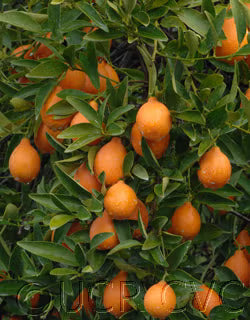

Mandarinquat
Indio Mandarinquat
Pickup currently unavailable at Aiken Nursery
The Indio mandarinquat is one of those happy accidents that citrus breeding throws up now and then, a natural cross between a mandarin (Citrus reticulata) and a kumquat (Citrus japonica) that borrows the best of both parents. From the mandarin come the size, the deep orange color, and the perfume; from the kumquat come the sweet, tender, wholly edible rind and a welcome measure of cold tolerance. The fruits hang like small golden lanterns against dark evergreen leaves through winter, oblong and glossy, and the whole tree carries a poise that belies how easy the plant is to grow.
The story behind the name is pure horticultural serendipity. The original seedling appeared, open-pollinated and unbidden, beneath an old Nagami kumquat at UCLA, the pollen parent never recorded. Distinctive enough to be worth saving, the seedling was collected in 1972 at the United States Date and Citrus Station in Indio, California, and that desert town lent the mandarinquat the name carried today. The variety now resides in the Givaudan Citrus Variety Collection at the University of California, Riverside, a quiet pedigree for a fruit still uncommon in gardens.
Mandarinquats belong to the small, useful tribe of kumquat hybrids that turn citrus growing on its head, since here the peel is the sweet part and the flesh the tart one, and the fruit is eaten whole, skin and all. Bite into one and the thin rind gives a honeyed, floral brightness before the pulp answers with a lemony tang. Cooks have long prized the mandarinquat for exactly this contrast, candying the fruits, simmering them into marmalade, slicing them into salads, or muddling them into cocktails and syrups where the aromatic, faintly bitter edge does work no ordinary orange can manage.
In the garden the mandarinquat earns a place as much for looks as for harvest. Compact and evergreen, the tree settles happily into a large container on a sunny patio, anchors an edible landscape, or stands as a small specimen near a door where the fragrant white spring blossoms can be met at close range. Hardier than most sweet citrus, holding to the low twenties Fahrenheit once established, the plant suits gardeners across zones 8 through 11, and farther north takes kindly to a pot that can be wheeled under cover when hard frost threatens. Give full sun, sharp drainage, and a spot out of cold wind, and the reward is a winter tree hung with edible gold.
- Hardiness
- USDA Zones 8–11
- Sun
- Full Sun
- Soil
- Well-drained
- Mature size
- Height 6–10 Feet · Spread 6–8 Feet
- Growth rate
- Moderate
- Seasonality
- Evergreen
From rooting to shipping, our top priority is ensuring you receive healthy, thriving plants for your garden’s success.
Because most of our plants are grown from rooted cuttings — alongside seed, air layering, and grafting chosen for each variety — you receive a stronger, true-to-type plant that establishes quickly in your garden.
Raised on organic soil blends and eco-friendly pest management — never harsh chemicals — your plant arrives healthy for your garden, your family, and the pollinators they feed.
Every purchase gives back. We donate to the Aiken Arboretum and support local wildlife conservation, so growing your garden helps protect the wider ecosystem too.

All our plant material is carefully propagated, grown, and nurtured at our humble nursery in Aiken, South Carolina.

Your plant arrives carefully packed and ready to settle in. Unpack them promptly, give them a day or two to acclimate, then plant following the notes we include — that’s all it takes. Clear care guidance comes with every order, so success is the easy part.
What to expect upon delivery
All our plants are sold in 1-gallon sizes, though the height of each plant can vary depending on its growth rate and seasonality, typically ranging from 1/2 to 2.5 feet.
Each plant is carefully packaged with its roots enclosed in a secure plastic bag containing moist soil, forming a compact root ball. To ensure safe transport, the box is padded with recycled newspaper, providing both stability and eco-friendly protection from weather during shipping.
What is your return policy?
Review our full return policy information on our SHIPPING AND RETURNS POLICY page.
What payment methods can I use?
We offer 35 different payment methods including major providers like Mastercard, Visa, PayPal, American Express and Diners as well as many different local payment methods including Klarna, iDEAL, AliPay, Sofort, giropay, and many more.
Can I make changes to my order after it’s been placed?
At Woodlanders, we strive to fulfill orders as quickly as possible. Therefore, we can only accommodate changes to your order within the first 24 hours after it has been placed. These changes include adding or removing products and modifying the delivery address. If you need to make any changes or if there has been a mistake with your order information, please reach out to us promptly via our CONTACT page with your order number for the quickest resolution.
Your satisfaction is our priority, and we appreciate your understanding and cooperation.