




Lavandin
Lavendula intermedia
In propagation
Currently growing out 1 Gallon pots. Expected Fall 2026.
Add your name with the notify button below, and we will email you the moment this plant is ready to bring home.
Learn how we grow on The Prop House.
Pickup currently unavailable at Aiken Nursery
Lavandula × intermedia is the lavender that finally makes sense of the Southeast. A natural and cultivated cross between English lavender (Lavandula angustifolia) and spike lavender (Lavandula latifolia), the plant is known in Provence as lavandin, and there the sterile, vigorous hybrid has long been the mainstay of the perfume fields, prized for a heavier yield of fragrant oil than either parent alone. The name records that middle ground: intermedia, intermediate, a lavender poised between the sweet refinement of the English kind and the camphorous punch of the spike.
Lavandula descends from the Latin lavare, to wash, a memory of the Romans who tossed lavender into their baths and rinsed their linens in the scent, and the whole clan belongs to the mint family, Lamiaceae, alongside rosemary, thyme, and sage. What sets lavandin apart in a humid climate is constitution. Where the true lavenders sulk and rot in muggy Southern summers, this hybrid carries enough spike-lavender blood to shrug off heat and damp air, provided the roots sit high and dry.
Our stock comes from Montrose Nursery, where this selection proved reliably durable in Zone 8, weathering the very combination of summer heat and humidity that undoes so many lavenders in the Southeast. The plant has also been evaluated through the Atlanta Regional Commission (ARC/ARM) plant trials, earning marks for vigor, garden performance, and long-term survival under real-world conditions. That history matters, because a lavender that persists in a humid climate is the exception rather than the rule.
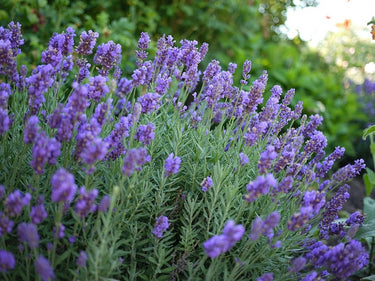
In flower the lavandin is all long, elegant wands, violet-purple spikes held well above a silver mound of narrow foliage, opening in early to midsummer and drawing bees in a steady hum. The spikes cut and dry beautifully, holding scent for months in a sachet or a winter bouquet. In the garden, lean, gritty soil and full sun are non-negotiable, so plant lavandin in a raised bed, a gravel border, or the crest of a dry slope where water drains away fast. Set the silver foliage against dark evergreens, pair the flowers with old roses or santolina, or run a low hedge along a sunny path where every brush of a sleeve releases the perfume.
For a Southern gardener who has buried more than one lavender, this is the place to begin again. Photo courtesy of FD Richards.
- Hardiness
- USDA Zones 5–9
- Sun
- Full Sun
- Soil
- Well-drained
- Mature size
- Height 2–3 Feet · Spread 2–3 Feet
- Growth rate
- Moderate
- Seasonality
- Semi-Evergreen
Violet-purple spikes on long stems, early to midsummer
References & research
These statements have not been evaluated by the Food and Drug Administration. This information is shared for traditional and educational interest only and is not intended to diagnose, treat, cure, or prevent any disease. Please consult a qualified healthcare professional before any medicinal use.
- Dilute the essential oil before applying to skin
- Lavandin oil is higher in camphor than English lavender; keep it away from young children and avoid during pregnancy
- Take any internal preparation only in small, traditional amounts
- Consult a physician or clinical herbalist before medicinal use
From rooting to shipping, our top priority is ensuring you receive healthy, thriving plants for your garden’s success.
Because most of our plants are grown from rooted cuttings — alongside seed, air layering, and grafting chosen for each variety — you receive a stronger, true-to-type plant that establishes quickly in your garden.
Raised on organic soil blends and eco-friendly pest management — never harsh chemicals — your plant arrives healthy for your garden, your family, and the pollinators they feed.
Every purchase gives back. We donate to the Aiken Arboretum and support local wildlife conservation, so growing your garden helps protect the wider ecosystem too.

All our plant material is carefully propagated, grown, and nurtured at our humble nursery in Aiken, South Carolina.

Your plant arrives carefully packed and ready to settle in. Unpack them promptly, give them a day or two to acclimate, then plant following the notes we include — that’s all it takes. Clear care guidance comes with every order, so success is the easy part.
What to expect upon delivery
All our plants are sold in 1-gallon sizes, though the height of each plant can vary depending on its growth rate and seasonality, typically ranging from 1/2 to 2.5 feet.
Each plant is carefully packaged with its roots enclosed in a secure plastic bag containing moist soil, forming a compact root ball. To ensure safe transport, the box is padded with recycled newspaper, providing both stability and eco-friendly protection from weather during shipping.
What is your return policy?
Review our full return policy information on our SHIPPING AND RETURNS POLICY page.
What payment methods can I use?
We offer 35 different payment methods including major providers like Mastercard, Visa, PayPal, American Express and Diners as well as many different local payment methods including Klarna, iDEAL, AliPay, Sofort, giropay, and many more.
Can I make changes to my order after it’s been placed?
At Woodlanders, we strive to fulfill orders as quickly as possible. Therefore, we can only accommodate changes to your order within the first 24 hours after it has been placed. These changes include adding or removing products and modifying the delivery address. If you need to make any changes or if there has been a mistake with your order information, please reach out to us promptly via our CONTACT page with your order number for the quickest resolution.
Your satisfaction is our priority, and we appreciate your understanding and cooperation.