

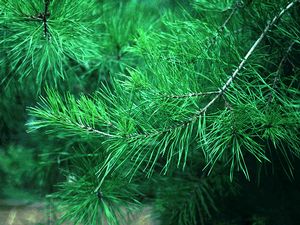
Spruce Pine

Pinus glabra

$25.00
1 Gallon USDA Zones 7–9 Full Sun Matures 60–80 Feet

Pickup available at Aiken Nursery

Usually ready in 2-4 days

Healthy-arrival guarantee Free shipping over $150
Roots wrapped in moist soil and padded for safe transit
Grown and shipped from our nursery in Aiken, SC
Shipping later in the season? Schedule your delivery date in your cart.

Almost everything about Pinus glabra argues against their being a pine at all. The bark is smooth and gray, close-grained, so like the bark of an oak or hickory that people walk straight past a mature one without recognizing it for a conifer; it is the single most reliable way to know the tree. The needles are soft, short, and paired, a cool dark green, worn in a dense rounded crown rather than the open candelabra of their relatives. And most usefully, they tolerate shade. Where nearly every other southern pine demands full sun and open, burned ground, spruce pine settles happily into the wooded margins just above the bottomlands, growing in the understory beneath oaks, beech, and magnolia. They were named by Thomas Walter, the English-born botanist of the Santee whose Flora Caroliniana appeared in London in 1788, the year before he died; the epithet glabra, meaning smooth and hairless, marks those glabrous young twigs. Even the timber keeps its own counsel, drying at so different a rate from other southern pines that mills cannot season it in the same batch. This is a pine for the places pines aren't supposed to go: the shaded corner, the woodland edge, the spot where you wanted evergreen structure and assumed you couldn't have it. Once you can recognize one, you start wanting them everywhere the light runs thin.

Will this plant thrive in your zone?

Plant Profile
At a glance
Hardiness
USDA Zones 7–9
Sun
Full Sun
Soil
Well-drained, Rich, Average
Mature size
Height 60–80 Feet · Spread 25–35 Feet
Growth rate
Moderate
Seasonality
Evergreen
Flower, Fruit & Foliage

Flowers
None in the usual sense; spruce pine reproduces by cones. Small yellow-brown male cones appear in clusters in early spring and release pollen to the wind. The larger female cones begin green and take two to three years to mature, ripening light brown, two to three inches long, and often holding on the tree well after they have opened.

Foliage
Soft, slender needles in bundles of two, dark green and faintly twisted, two and a half to four inches long. Finer and gentler to the touch than any other southern pine, held in a dense rounded canopy that reads almost like a broadleaf evergreen from across a clearing. Held year round.

Bark
The feature to know it by. Smooth and gray on young trees, maturing to close interlacing ridges that resemble the bark of an oak rather than a pine, with none of the resin-plated roughness of its relatives.

Care

Read our full care guide

Pinus glabra, commonly known as Spruce Pine, is an evergreen conifer native to the southeastern United States, particularly thriving in wetland areas. It is a unique member of the Pinaceae family, notable for its ability to grow outside typical pine stands. This tree can reach impressive heights of up to 80 feet, with a more common range of 40-50 feet. Its rounded, dark green canopy and tolerance for moist soils make it a versatile choice for landscaping and naturalized areas.

Planting and Location:

  • Sunlight: Spruce Pine thrives best in full sun conditions, receiving direct sunlight for most of the day to promote vigorous growth and optimal health. While it can adapt to partial shade, deviation from full sun may result in reduced growth vigor and diminished health.
  • Soil: This tree is adaptable to various soil conditions, growing happily in well-drained, rich, average, and gritty soil. It prefers slightly acidic to neutral soils with consistent moisture. Proper drainage is essential to prevent root rot.
  • Spacing: When planting multiple Spruce Pines, space them 24 to 60 feet apart to accommodate their mature size and ensure proper air circulation.

Watering:

  • Establishment Period: Water newly planted trees thoroughly and regularly during the first growing season to establish a deep, extensive root system.
  • Established Plants: Once established, Spruce Pine is somewhat drought-tolerant but benefits from regular watering during prolonged dry spells, especially when young. Overwatering, however, can lead to root rot.

Fertilization:

  • Apply a balanced, slow-release fertilizer in early spring as new growth begins. Avoid excessive fertilization, as it can lead to lush foliage with reduced flowering.

Pruning:

  • Timing: Prune during the dormancy period to prevent excess loss of sap and damage to the plant’s vigor.
  • Method: Remove dead, diseased, or damaged branches to improve air circulation and overall plant health. For garden plants, dense lateral branches should be pruned to improve survival rate. Remove excess lateral branches during the vigorous growth period based on needs, focusing on encouraging the trunk to grow tall and straight. Cut off any diseased or dead branches right away to prevent the spread of pathogens.

Pests and Diseases:

  • Spruce Pine is generally resistant to serious pests and diseases. However, monitor for common issues such as canker diseases, which may cause dieback. Infected branches can be pruned.

Winter Care:

  • Hardy in USDA Zones 8 to 9. In colder regions, consider mulching around the base of the plant to protect the roots during winter. While evergreen in warmer climates, it may experience some leaf drop in colder areas.

Additional Considerations:

  • Wildlife Attraction: The seed cones persist on the tree for 2-3 years, providing food for wildlife. This plant supports Imperial Moth (Eacles imperialis) larvae, which have one brood per season and appear from April-October in the south. Adult Imperial Moths do not feed. Squirrels and other mammals eat the seeds, along with the Northern bobwhite.
  • Landscape Use: Spruce Pine makes an outstanding screen or windbreak and provides shade. This variety of pine is also used as a Christmas tree.
Here’s a closer look at how we produce our plants

From rooting to shipping, our top priority is ensuring you receive healthy, thriving plants for your garden’s success.

Woodlanders Growing Process

Because most of our plants are grown from rooted cuttings — alongside seed, air layering, and grafting chosen for each variety — you receive a stronger, true-to-type plant that establishes quickly in your garden.

Sustainable Growing Practices

Raised on organic soil blends and eco-friendly pest management — never harsh chemicals — your plant arrives healthy for your garden, your family, and the pollinators they feed.

Supporting Local Biodiversity

Every purchase gives back. We donate to the Aiken Arboretum and support local wildlife conservation, so growing your garden helps protect the wider ecosystem too.

At Woodlanders, we are committed to quality.
Grown in Aiken, South Carolina
At Woodlanders, we are committed to quality.

All our plant material is carefully propagated, grown, and nurtured at our humble nursery in Aiken, South Carolina.

Learn more about Woodlanders
Healthy plants, ready to thrive
Success, made simple
Healthy plants, ready to thrive

Your plant arrives carefully packed and ready to settle in. Unpack them promptly, give them a day or two to acclimate, then plant following the notes we include — that’s all it takes. Clear care guidance comes with every order, so success is the easy part.

Read the care guide
Frequently Asked Questions
What to expect upon delivery

All our plants are sold in 1-gallon sizes, though the height of each plant can vary depending on its growth rate and seasonality, typically ranging from 1/2 to 2.5 feet.

Each plant is carefully packaged with its roots enclosed in a secure plastic bag containing moist soil, forming a compact root ball. To ensure safe transport, the box is padded with recycled newspaper, providing both stability and eco-friendly protection from weather during shipping.

What is your return policy?

Review our full return policy information on our SHIPPING AND RETURNS POLICY page.

What payment methods can I use?

We offer 35 different payment methods including major providers like Mastercard, Visa, PayPal, American Express and Diners as well as many different local payment methods including Klarna, iDEAL, AliPay, Sofort, giropay, and many more.

Can I make changes to my order after it’s been placed?

At Woodlanders, we strive to fulfill orders as quickly as possible. Therefore, we can only accommodate changes to your order within the first 24 hours after it has been placed. These changes include adding or removing products and modifying the delivery address. If you need to make any changes or if there has been a mistake with your order information, please reach out to us promptly via our CONTACT page with your order number for the quickest resolution.

Your satisfaction is our priority, and we appreciate your understanding and cooperation.