

Medicinal

Narrow leaf Mountain Mint

Pycnanthemum tenuifolium

$16.00
1 Gallon USDA Zones 6–9 Full Sun and Part Shade Matures 2–3 Feet
2 in stock

Pickup available at Aiken Nursery

Usually ready in 2-4 days

Healthy-arrival guarantee Free shipping over $150
Roots wrapped in moist soil and padded for safe transit
Grown and shipped from our nursery in Aiken, SC
Shipping later in the season? Schedule your delivery date in your cart.

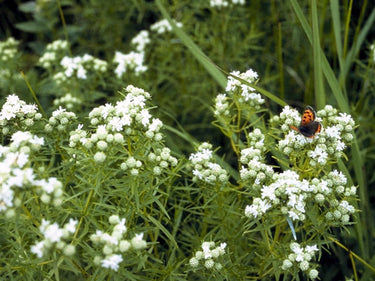
Perennial plant with long, narrow leaves and attractive white to pale purple flowers on much branched spikes in late summer. The dense foliage and nice flowers of this adaptable perennial make it a good garden plant.

It is native to much of eastern North America and should be planted in a sunny location with good soil that can be moist or well-drained but irrigated.

The leaves and stems are aromatic and can be used to make a tea. The plant is attractive to butterflies.

Will this plant thrive in your zone?

Explore this plant’s medicinal profile
Plant Profile
At a glance
Hardiness
USDA Zones 6–9
Sun
Full Sun, Part Shade
Soil
Well-drained
Mature size
Height 2–3 Feet · Spread 2–3 Feet
Growth rate
Moderate
Seasonality
Dies back, depends on zone
Flower, Fruit & Foliage

Flower:

  • The flowers of Pycnanthemum tenuifolium are small, tubular, and white to pale lavender, often adorned with tiny purple speckles.
  • Arranged in dense, flat-topped clusters (corymbs) at the ends of stems, they create a soft, cloud-like appearance in bloom.
  • Flowers typically appear in mid-summer to early fall, attracting a diverse range of pollinators such as bees, butterflies, and other beneficial insects.
  • Each flower measures about 1/4 inch across but collectively makes a striking visual impact.

Fruit:

  • The fruit is a tiny, dry nutlet, characteristic of plants in the mint family (Lamiaceae).
  • Nutlets are inconspicuous and not particularly ornamental but serve as a seed source for propagation.
  • Seeds are small and can self-sow under favorable conditions, contributing to the plant's natural spread.

Foliage:

  • The foliage is composed of slender, needle-like leaves, giving the plant a fine-textured, airy appearance.
  • Leaves are light green to medium green and grow in opposite pairs along the square stems, typical of mint family plants.
  • When crushed, the foliage releases a strong, minty fragrance, adding sensory appeal to gardens.
  • The narrow leaves measure about 1–2 inches long and are smooth-edged, with a slightly glossy surface.

Summary:

The delicate flowers of Pycnanthemum tenuifolium are a magnet for pollinators, while its fine, aromatic foliage adds texture and fragrance to the landscape. Though its fruit is modest, the plant’s overall charm lies in its ability to enhance naturalistic and pollinator-friendly gardens.

Care

Read our full care guide

Pycnanthemum tenuifolium, commonly known as Narrowleaf Mountain Mint, is a hardy and aromatic herbaceous perennial native to North America. Known for its slender leaves, clusters of small white flowers, and highly fragrant foliage, it is a favorite for pollinator gardens and naturalized landscapes. This low-maintenance plant thrives in a variety of conditions and is an excellent choice for gardeners looking to support biodiversity.

Sunlight:

  • Prefers full sun for optimal growth and flowering.
  • Can tolerate partial shade, but blooming may be reduced in low-light conditions.

Soil:

  • Thrives in well-drained soil with a loamy or sandy texture.
  • Tolerates a wide range of soil conditions, from dry to moderately moist.
  • Ideal pH range: 6.0–7.5 (neutral to slightly acidic).

Watering:

  • Drought-tolerant once established; requires minimal supplemental watering.
  • Water deeply but infrequently, allowing the soil to dry between watering.
  • Avoid overwatering, as this plant prefers dry to medium moisture levels.

Fertilization:

  • Fertilization is generally unnecessary in well-draining, nutrient-rich soil.
  • If needed, apply a light layer of compost or a balanced, slow-release fertilizer in early spring.

Pruning:

  • Prune back in late winter or early spring to remove dead growth and encourage a tidy appearance.
  • Deadheading is not required but can prolong the blooming period and prevent self-seeding if desired.

Temperature & Hardiness:

  • Hardy in USDA zones 6–9.
  • Tolerates a wide range of temperatures and performs well in both hot summers and cold winters.

Pests & Diseases:

  • Highly resistant to most pests and diseases.
  • The aromatic foliage helps deter deer and rabbits, making it an excellent choice for wildlife-resistant gardens.

Companion Planting:

  • Pairs well with other native prairie plants such as Echinacea purpurea (Purple Coneflower), Rudbeckia hirta (Black-Eyed Susan), and grasses like Schizachyrium scoparium (Little Bluestem).

Wildlife Value:

  • Attracts a wide variety of pollinators, including bees, butterflies, and beneficial insects.
  • Acts as a host plant for certain native butterflies and moths.

Propagation:

  • Propagate by division in early spring or fall.
  • Can also be grown from seed; sow in fall for natural stratification or cold-treat seeds before spring sowing.

Special Notes:

  • Narrowleaf Mountain Mint is an excellent choice for naturalized meadows, pollinator gardens, and herbaceous borders.
  • The highly aromatic foliage can be used to make herbal teas or dried for potpourri.

By following these care instructions, Pycnanthemum tenuifolium will thrive in your garden, offering beauty, fragrance, and ecological benefits year after year.

Medicinal & Traditional Use
Traditional profile
Tradition
Carminative: Eases digestive discomfort., Diaphoretic: Induces sweating to help break fevers., Antimicrobial: Combats certain bacteria and viruses., Analgesic: Provides mild pain relief.
Parts used
Leaves: Primary component for teas and topical applications., Flowers: Often included in infusions for their aromatic qualities.
Preparation
Tea/Infusion: Steep dried leaves and flowers in hot water to create a soothing tea for digestive issues and respiratory ailments., Poultice: Crushed fresh leaves can be applied topically to relieve headaches or treat minor wounds., Aromatherapy: The essential oil extracted from the plant can be used in diffusers for its calming effects.
Active compounds
The plant's essential oils are rich in compounds like menthone, isomenthone, limonene, and piperitone, which contribute to its minty aroma and medicinal properties. These constituents are known for their antimicrobial, anti-inflammatory, and digestive benefits.
Research evidence
2 / 5
Traditional uses
Digestive HealthImmune SupportTopical Applications
History & tradition

P. tenuifolium has been used in herbal teas and by
many native tribes as a seasoning in food to improve
flavor. Members of the genus Pycnanthemum were
once referred to as American wild basil; so widespread was its use.

The Meskwaki used this plant as an unspecified remedy and for baiting their mink traps. The Potawatomi believed a tea made from the leaves of this plant to be the best tonic for revival from exhaustion or a generally rundown condition. Early settlers used a poultice including P. tenuifolium on dog and other animal bites to prevent rabies. A leaf tea served as a general tonic and as a treatment for indigestion. They also used the leaves as a seasoning in cooking.

References & research

Research indicates that P. tenuifolium's essential oils possess significant antimicrobial properties, making it effective against various pathogens. Its high menthone and isomenthone content also suggest potential in pharmaceutical and nutraceutical applications.

Essential Oils of Four Virginia Mountain Mint (Pycnanthemum virginianum) Varieties

ETHNOBOTANICAL CLASSIFICATION SYSTEM AND MEDICAL ETHNOBOTANY OF
THE EASTERN BAND OF THE CHEROKEE INDIANS

USDA Plant Guide

Please note

These statements have not been evaluated by the Food and Drug Administration. This information is shared for traditional and educational interest only and is not intended to diagnose, treat, cure, or prevent any disease. Please consult a qualified healthcare professional before any medicinal use.

  • Pregnancy: Due to its potent compounds, it's advisable for pregnant individuals to consult a healthcare professional before use.
  • Allergies: Those with sensitivities to mint family plants should exercise caution.
Here’s a closer look at how we produce our plants

From rooting to shipping, our top priority is ensuring you receive healthy, thriving plants for your garden’s success.

Woodlanders Growing Process

Because most of our plants are grown from rooted cuttings — alongside seed, air layering, and grafting chosen for each variety — you receive a stronger, true-to-type plant that establishes quickly in your garden.

Sustainable Growing Practices

Raised on organic soil blends and eco-friendly pest management — never harsh chemicals — your plant arrives healthy for your garden, your family, and the pollinators they feed.

Supporting Local Biodiversity

Every purchase gives back. We donate to the Aiken Arboretum and support local wildlife conservation, so growing your garden helps protect the wider ecosystem too.

At Woodlanders, we are committed to quality.
Grown in Aiken, South Carolina
At Woodlanders, we are committed to quality.

All our plant material is carefully propagated, grown, and nurtured at our humble nursery in Aiken, South Carolina.

Learn more about Woodlanders
Healthy plants, ready to thrive
Success, made simple
Healthy plants, ready to thrive

Your plant arrives carefully packed and ready to settle in. Unpack them promptly, give them a day or two to acclimate, then plant following the notes we include — that’s all it takes. Clear care guidance comes with every order, so success is the easy part.

Read the care guide
Frequently Asked Questions
What to expect upon delivery

All our plants are sold in 1-gallon sizes, though the height of each plant can vary depending on its growth rate and seasonality, typically ranging from 1/2 to 2.5 feet.

Each plant is carefully packaged with its roots enclosed in a secure plastic bag containing moist soil, forming a compact root ball. To ensure safe transport, the box is padded with recycled newspaper, providing both stability and eco-friendly protection from weather during shipping.

What is your return policy?

Review our full return policy information on our SHIPPING AND RETURNS POLICY page.

What payment methods can I use?

We offer 35 different payment methods including major providers like Mastercard, Visa, PayPal, American Express and Diners as well as many different local payment methods including Klarna, iDEAL, AliPay, Sofort, giropay, and many more.

Can I make changes to my order after it’s been placed?

At Woodlanders, we strive to fulfill orders as quickly as possible. Therefore, we can only accommodate changes to your order within the first 24 hours after it has been placed. These changes include adding or removing products and modifying the delivery address. If you need to make any changes or if there has been a mistake with your order information, please reach out to us promptly via our CONTACT page with your order number for the quickest resolution.

Your satisfaction is our priority, and we appreciate your understanding and cooperation.