



Hemlock, Himalayan
Tsuga dumosa (yunnanensis)
In propagation
Currently growing out 1 Gallon pots. Expected season to be announced.
Add your name with the notify button below, and we will email you the moment this plant is ready to bring home.
Learn how we grow on The Prop House.
Pickup currently unavailable at Aiken Nursery
Botanists now file this hemlock under Tsuga dumosa, the Himalayan hemlock, though the tree reached American gardens, and reached us, as Tsuga yunnanensis. The two names describe one tree seen from opposite ends of a very long range: dumosa, meaning bushy, from the Nepalese and Bhutanese end, and yunnanensis from the Chinese. Kew's Plants of the World Online treats the Yunnan name as a synonym, so the accepted name comes first here and the old one stays in parentheses, because that is the name most people will be searching for.
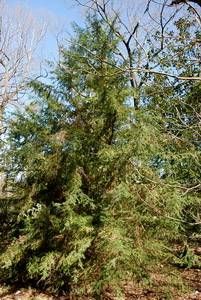
Woodlanders received this hemlock originally from the Arnold Arboretum in Massachusetts. The Arboretum had obtained the tree from China and did not expect the plant to prove hardy that far north. Here in Aiken the story ran the other way. Given a semi-shaded position in the Deep South, the tree settled in and grew into a dark green, graceful pyramid, and Woodlanders has probably been the first nursery in the United States to offer this hemlock to gardeners.
In the wild, Tsuga dumosa holds a long belt of the eastern Himalaya, running from Nepal through Bhutan and northeastern India into Myanmar, Tibet and Yunnan, mostly between about 8,500 and 10,500 feet, in cool cloud forest with heavy rainfall and constant humidity. Trees there reach 65 to 80 feet and occasionally a good deal more. In a Southern garden expect something more modest, closer to thirty or forty feet over many years, with slender drooping branchlets and glossy deep green needles laid out in flat sprays.
Across the Himalaya the wood has long been split into shingles and used, with the bark, for roofing houses, and worked for construction and furniture. Indian foresters rank the timber below several other Himalayan conifers, which is faint praise for a tree that roofs villages. The bark is rich in tannin and has been used in dyeing. None of that is why anyone plants a hemlock in Carolina, but the tree carries a working life in another part of the world, and that is worth knowing.
This is the plant for gardeners who have wanted a hemlock and watched our native Tsuga canadensis sulk and decline in Southern heat. Give the tree high shade or a half day of morning sun, moist but well drained acidic soil, shelter from hot dry wind, and room to build a pyramid. Underplant with Illicium, Danae racemosa, or hardy ferns, and site the specimen where late light can catch the drooping branch tips.
- Hardiness
- USDA Zones 8–9
- Sun
- Part Shade, Full Shade
- Soil
- Well-drained, Moist, Acid
- Mature size
- Height 30–40 Feet · Spread 18–25 Feet
- Growth rate
- Slow
- Seasonality
- Evergreen
Grown for foliage; small pendent cones about one inch long
From rooting to shipping, our top priority is ensuring you receive healthy, thriving plants for your garden’s success.
Because most of our plants are grown from rooted cuttings — alongside seed, air layering, and grafting chosen for each variety — you receive a stronger, true-to-type plant that establishes quickly in your garden.
Raised on organic soil blends and eco-friendly pest management — never harsh chemicals — your plant arrives healthy for your garden, your family, and the pollinators they feed.
Every purchase gives back. We donate to the Aiken Arboretum and support local wildlife conservation, so growing your garden helps protect the wider ecosystem too.

All our plant material is carefully propagated, grown, and nurtured at our humble nursery in Aiken, South Carolina.

Your plant arrives carefully packed and ready to settle in. Unpack them promptly, give them a day or two to acclimate, then plant following the notes we include — that’s all it takes. Clear care guidance comes with every order, so success is the easy part.
What to expect upon delivery
All our plants are sold in 1-gallon sizes, though the height of each plant can vary depending on its growth rate and seasonality, typically ranging from 1/2 to 2.5 feet.
Each plant is carefully packaged with its roots enclosed in a secure plastic bag containing moist soil, forming a compact root ball. To ensure safe transport, the box is padded with recycled newspaper, providing both stability and eco-friendly protection from weather during shipping.
What is your return policy?
Review our full return policy information on our SHIPPING AND RETURNS POLICY page.
What payment methods can I use?
We offer 35 different payment methods including major providers like Mastercard, Visa, PayPal, American Express and Diners as well as many different local payment methods including Klarna, iDEAL, AliPay, Sofort, giropay, and many more.
Can I make changes to my order after it’s been placed?
At Woodlanders, we strive to fulfill orders as quickly as possible. Therefore, we can only accommodate changes to your order within the first 24 hours after it has been placed. These changes include adding or removing products and modifying the delivery address. If you need to make any changes or if there has been a mistake with your order information, please reach out to us promptly via our CONTACT page with your order number for the quickest resolution.
Your satisfaction is our priority, and we appreciate your understanding and cooperation.