




Chinese Bayberry
Myrica rubra
See all 7 Bayberries & Wax Myrtles
Pickup available at Aiken Nursery
Usually ready in 2-4 days
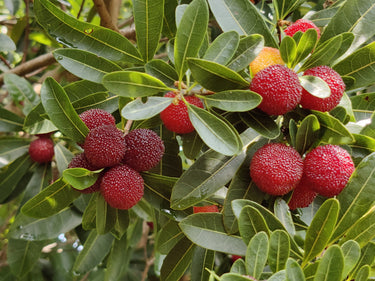
Myrica rubra, the Chinese bayberry or yangmei, is a fruiting evergreen tree from the misty mountains of East Asia, revered for centuries across China and Japan for tangy-sweet berries and an elegant, shapely form. Imagine cherries and cranberries with a botanical lovechild that had the moodiness of a plum and the antioxidant punch of a superfruit, and something close to yangmei would be the result. The plants we grow are female, tissue-cultured clones of a named selection.
The selection offered is 'Wuzi', either a newly chosen form from the famed Dongkui-growing region or a hybrid of Dongkui and Biqi. The name Wuzi translates as dark purple, a nod to the richly pigmented fruit, which runs darker and tastier than Dongkui if a touch smaller, and in the native region ripens about five days earlier, an early-season treat prized for both flavor and beauty.
Yangmei has always held a special place at Woodlanders. A beautiful mature specimen has grown in Aiken for years, quietly admired for evergreen grace and seasonal magic, but more than two decades have passed since the nursery could last offer this elusive gem to customers. Thanks to the meticulous work of a new partner, the Plant Propagator behind yangmei.us and a leading voice for yangmei cultivation in the United States, Woodlanders is proud to reintroduce this rare species to American gardens.
The reward is a shapely evergreen of shimmering, softly lanceolate leaves and, on a pollinated female, clusters of bumpy, jewel-like fruit in deep crimson to purple-black, sweet-tart and faintly resinous, rich in the anthocyanins that make yangmei a celebrated functional food in East Asia. A word for the determined gardener: yangmei is not for the faint of heart, slow to establish and sensitive to transplant, yet remarkably resilient once settled. Those who commit are rewarded with a plant that bridges the ornamental and the edible. Read this plant's full story here.
One honest thing before you buy. The trees offered here are female clones, and a female yangmei needs a male within pollen range to set a crop. We do not have males yet; they are in propagation now, and the people on the Node list will hear about them first. That matters less than the bald fact suggests, because a young yangmei takes several years to reach fruiting age, so a male planted a season or two from now will be in the ground long before the first flowers open. Plant the female first; the pollen can catch up. And in the meantime you have a good evergreen tree, which is most of why we grow them. Tell me when the males are ready.
- Hardiness
- USDA Zones 8–10
- Sun
- Full Sun, Part Shade
- Soil
- Well-drained, Acid
- Mature size
- Height 15–30 Feet · Spread 10–20 Feet
- Growth rate
- Fast
- Seasonality
- Evergreen
Inconspicuous reddish catkins, late winter to spring; dioecious
From rooting to shipping, our top priority is ensuring you receive healthy, thriving plants for your garden’s success.
Because most of our plants are grown from rooted cuttings — alongside seed, air layering, and grafting chosen for each variety — you receive a stronger, true-to-type plant that establishes quickly in your garden.
Raised on organic soil blends and eco-friendly pest management — never harsh chemicals — your plant arrives healthy for your garden, your family, and the pollinators they feed.
Every purchase gives back. We donate to the Aiken Arboretum and support local wildlife conservation, so growing your garden helps protect the wider ecosystem too.

All our plant material is carefully propagated, grown, and nurtured at our humble nursery in Aiken, South Carolina.

Your plant arrives carefully packed and ready to settle in. Unpack them promptly, give them a day or two to acclimate, then plant following the notes we include — that’s all it takes. Clear care guidance comes with every order, so success is the easy part.
What to expect upon delivery
All our plants are sold in 1-gallon sizes, though the height of each plant can vary depending on its growth rate and seasonality, typically ranging from 1/2 to 2.5 feet.
Each plant is carefully packaged with its roots enclosed in a secure plastic bag containing moist soil, forming a compact root ball. To ensure safe transport, the box is padded with recycled newspaper, providing both stability and eco-friendly protection from weather during shipping.
What is your return policy?
Review our full return policy information on our SHIPPING AND RETURNS POLICY page.
What payment methods can I use?
We offer 35 different payment methods including major providers like Mastercard, Visa, PayPal, American Express and Diners as well as many different local payment methods including Klarna, iDEAL, AliPay, Sofort, giropay, and many more.
Can I make changes to my order after it’s been placed?
At Woodlanders, we strive to fulfill orders as quickly as possible. Therefore, we can only accommodate changes to your order within the first 24 hours after it has been placed. These changes include adding or removing products and modifying the delivery address. If you need to make any changes or if there has been a mistake with your order information, please reach out to us promptly via our CONTACT page with your order number for the quickest resolution.
Your satisfaction is our priority, and we appreciate your understanding and cooperation.