




Cape Jasmine
Gardenia jasminoides 'Chuck Hayes'
Pickup currently unavailable at Aiken Nursery
The gardenia needs no introduction in the South; the scent alone has been stopping people in driveways for generations. What 'Chuck Hayes' adds to that old story is nerve in the cold. The line traces back to the late 1970s and a Virginia Beach nurseryman named Charlie Hayes, who noticed a single-flowered gardenia that had come through a brutal freeze unbothered. He crossed that survivor with a double-flowered plant and handed the seedlings to Dan Milbocker, a horticulturist at the Hampton Roads research station, who grew them out, picked the toughest, and eventually released the plant under Hayes's name. The result is a fully double, classically fragrant gardenia that behaves as a far more delicate shrub has no right to.
The hardiness is not marketing. In side-by-side trials against 'Mystery', a gardenia already considered cold-tough, 'Chuck Hayes' came through field freezes that left the rival with heavy dieback, losing only a few leaves on the windward side, and shrugged off lab temperatures that killed 'Mystery' outright. This gardenia holds reliably through Zone 7 and has been pushed colder by gardeners willing to offer a sheltered wall. For anyone in the Middle Atlantic who has watched a gardenia die to the ground every hard winter, that difference is the whole point.
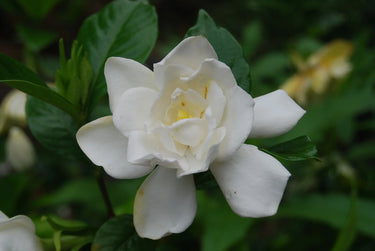
Then there is the bloom, the reason to grow any gardenia. Three-inch double flowers, creamy white aging toward ivory, with the thick velvet texture and the heavy, carrying perfume the species is famous for. The first flush runs through early summer; what sets this selection apart is the encore, a genuine second wave in late summer that often carries on until frost. A mature plant settles in around four to five feet, rounded and densely clothed in glossy dark green leaves that hold all winter, so the shrub earns a place in the border even in the months without flowers.
Part shade suits 'Chuck Hayes', and in the warm South an eastern exposure is fine. Where winters are sharp, give the opposite: a north or west aspect sheltered from early morning sun, which thaws cold-stunned foliage too fast and ruptures the leaf. Site the plant once and well, and the same patch of air will carry the same perfume every June for decades. Gardenia jasminoides is native to eastern Asia; this particular form is pure Tidewater Virginia, and one of the few that will follow a gardener north.
- Hardiness
- USDA Zones 7–10
- Sun
- Full Sun, Part Shade
- Soil
- Well-drained, Acid
- Mature size
- Height 4–6 Feet · Spread 4–6 Feet
- Growth rate
- Moderate
- Seasonality
- Evergreen
3 inch double flowers, creamy white to ivory, fragrant, early summer with late-summer rebloom
From rooting to shipping, our top priority is ensuring you receive healthy, thriving plants for your garden’s success.
Because most of our plants are grown from rooted cuttings — alongside seed, air layering, and grafting chosen for each variety — you receive a stronger, true-to-type plant that establishes quickly in your garden.
Raised on organic soil blends and eco-friendly pest management — never harsh chemicals — your plant arrives healthy for your garden, your family, and the pollinators they feed.
Every purchase gives back. We donate to the Aiken Arboretum and support local wildlife conservation, so growing your garden helps protect the wider ecosystem too.

All our plant material is carefully propagated, grown, and nurtured at our humble nursery in Aiken, South Carolina.

Your plant arrives carefully packed and ready to settle in. Unpack them promptly, give them a day or two to acclimate, then plant following the notes we include — that’s all it takes. Clear care guidance comes with every order, so success is the easy part.
What to expect upon delivery
All our plants are sold in 1-gallon sizes, though the height of each plant can vary depending on its growth rate and seasonality, typically ranging from 1/2 to 2.5 feet.
Each plant is carefully packaged with its roots enclosed in a secure plastic bag containing moist soil, forming a compact root ball. To ensure safe transport, the box is padded with recycled newspaper, providing both stability and eco-friendly protection from weather during shipping.
What is your return policy?
Review our full return policy information on our SHIPPING AND RETURNS POLICY page.
What payment methods can I use?
We offer 35 different payment methods including major providers like Mastercard, Visa, PayPal, American Express and Diners as well as many different local payment methods including Klarna, iDEAL, AliPay, Sofort, giropay, and many more.
Can I make changes to my order after it’s been placed?
At Woodlanders, we strive to fulfill orders as quickly as possible. Therefore, we can only accommodate changes to your order within the first 24 hours after it has been placed. These changes include adding or removing products and modifying the delivery address. If you need to make any changes or if there has been a mistake with your order information, please reach out to us promptly via our CONTACT page with your order number for the quickest resolution.
Your satisfaction is our priority, and we appreciate your understanding and cooperation.