



Ichang Papeda
Citrus cavaleriei (ichangensis)
Pickup currently unavailable at Aiken Nursery
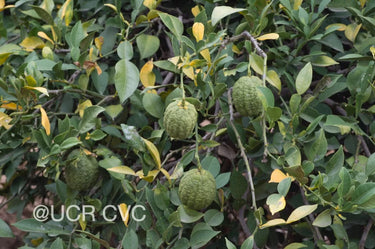
The Ichang papeda is a thorny evergreen small tree of twelve to fifteen feet, and the most cold-tolerant true citrus known to science, reported hardy to roughly five degrees Fahrenheit. The leaves are the tell: unusually large winged petioles, sometimes nearly as big as the blade itself, so each leaf looks like two leaves joined end to end. White flowers open in spring with the sweet heavy scent the whole genus is loved for. Fruit follows, rough-skinned and yellow, orange-sized, packed with large seeds and very little flesh. Sharply aromatic rather than sweet, and nobody would call this dessert fruit, though the zest is fragrant and useful and the juice finds work in marmalade, salt preserving, and drying.
The name has recently changed, and both versions are worth knowing. Gardeners and citrus breeders have called this plant Citrus ichangensis since Walter Tennyson Swingle published the name in 1913, but Citrus cavaleriei, published by Léveillé two years earlier, has priority, and Kew's Plants of the World Online now treats cavaleriei as the accepted name with ichangensis as a synonym. Ichang, the older romanization of Yichang in Hubei, marks the place; papeda is the name given to the group of hard, seedy, primitive citrus that sit outside the sweet oranges and lemons in the family tree.
Swingle himself brought the plant to the United States. In 1926 he carried home a healthy young seedling raised for him at Nanking by C. C. Hu, grown from stock out of Hubei Province, and the interest was never ornamental. As the hardiest evergreen species in the genus, this papeda has been the raw material for cold-hardy citrus breeding ever since. The yuzu, now a fixture of Japanese cooking and increasingly of Western kitchens, is a cross of this species with a mandarin. The Ichang lemon is another of the offspring. Almost every serious attempt to push edible citrus north of its comfortable range runs through this tree somewhere.
Grow in full sun with sharp drainage and shelter from cold drying wind. The species will take temperatures that kill any other evergreen citrus outright, but wet cold is a different matter than dry cold, and a soggy winter root run will do far more damage than the thermometer. In zone 7 give a warm south wall and expect some leaf burn in a hard year; from zone 8 south, plant with confidence. Container culture works well and lets northern growers keep one under glass. Use as a specimen where the fragrance can be reached from a path, and be honest with yourself about the thorns, which are long, stiff, and unforgiving. This is a plant for collectors, citrus breeders, and anyone who enjoys owning the answer to a question nobody expects.
- Hardiness
- USDA Zones 7–10
- Sun
- Full Sun
- Soil
- Well-drained
- Mature size
- Height 12–15 Feet · Spread 6–8 Feet
- Growth rate
- Moderate
- Seasonality
- Evergreen
sweetly fragrant white citrus flowers in spring, followed by rough yellow seedy aromatic fruit
From rooting to shipping, our top priority is ensuring you receive healthy, thriving plants for your garden’s success.
Because most of our plants are grown from rooted cuttings — alongside seed, air layering, and grafting chosen for each variety — you receive a stronger, true-to-type plant that establishes quickly in your garden.
Raised on organic soil blends and eco-friendly pest management — never harsh chemicals — your plant arrives healthy for your garden, your family, and the pollinators they feed.
Every purchase gives back. We donate to the Aiken Arboretum and support local wildlife conservation, so growing your garden helps protect the wider ecosystem too.

All our plant material is carefully propagated, grown, and nurtured at our humble nursery in Aiken, South Carolina.

Your plant arrives carefully packed and ready to settle in. Unpack them promptly, give them a day or two to acclimate, then plant following the notes we include — that’s all it takes. Clear care guidance comes with every order, so success is the easy part.
What to expect upon delivery
All our plants are sold in 1-gallon sizes, though the height of each plant can vary depending on its growth rate and seasonality, typically ranging from 1/2 to 2.5 feet.
Each plant is carefully packaged with its roots enclosed in a secure plastic bag containing moist soil, forming a compact root ball. To ensure safe transport, the box is padded with recycled newspaper, providing both stability and eco-friendly protection from weather during shipping.
What is your return policy?
Review our full return policy information on our SHIPPING AND RETURNS POLICY page.
What payment methods can I use?
We offer 35 different payment methods including major providers like Mastercard, Visa, PayPal, American Express and Diners as well as many different local payment methods including Klarna, iDEAL, AliPay, Sofort, giropay, and many more.
Can I make changes to my order after it’s been placed?
At Woodlanders, we strive to fulfill orders as quickly as possible. Therefore, we can only accommodate changes to your order within the first 24 hours after it has been placed. These changes include adding or removing products and modifying the delivery address. If you need to make any changes or if there has been a mistake with your order information, please reach out to us promptly via our CONTACT page with your order number for the quickest resolution.
Your satisfaction is our priority, and we appreciate your understanding and cooperation.