




Ogeechee Tupelo
Nyssa ogeche
In propagation
Currently growing out 1 Gallon pots. Expected Summer 2027.
Add your name with the notify button below, and we will email you the moment this plant is ready to bring home.
Learn how we grow on The Prop House.
Pickup currently unavailable at Aiken Nursery
Nyssa ogeche, the Ogeechee tupelo, is a medium-sized deciduous tree of the southeastern Coastal Plain, at home from southern South Carolina through the Ogeechee valley of Georgia into northern Florida and Alabama. The genus name honors Nyssa, a water nymph of Greek myth, and the tree lives up to the name, thriving along creeks, river swamps, and seasonally flooded bottoms where the soil stays acidic and wet.
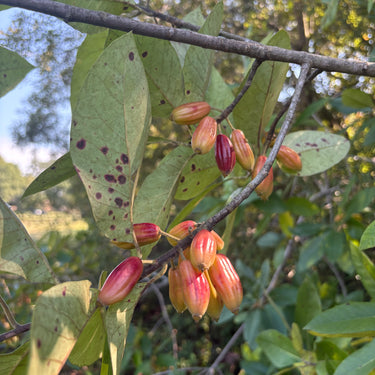
Best known of all is the fruit: elongated, bright red drupes borne on female trees that ripen in late summer, so sharply sour that generations of Southern cooks have turned them into Ogeechee lime jelly, marmalade, and a tart limeade. The spring flowers are small and green, easy to overlook, yet they are the source of one of the South's most prized honeys. Bees working white tupelo, as Nyssa ogeche is also called, produce the celebrated tupelo honey, and the tree carries the fitting nicknames bee tupelo and sour tupelo.
In leaf, the Ogeechee tupelo is bold and clean, with large, glossy green leaves that build a full, lush canopy through summer before softening to yellow and orange in fall. Female trees turn genuinely ornamental in fruit, the red drupes hanging clearly against the foliage at a season when many natives have gone quiet.
Though tied to swamps in the wild, the Ogeechee tupelo is more adaptable than most wetland trees and settles happily into well-drained garden soil as long as moisture is reliable, tolerating both brief flooding and short dry spells once established. With edible fruit, deep regional roots, and real value to pollinators and wildlife, the tree suits larger gardens, pond and stream edges, and any planting that celebrates Southeastern natives and foodways.
- Hardiness
- USDA Zones 7–9
- Sun
- Full Sun, Part Shade
- Soil
- Moist, Well-drained
- Mature size
- Height 25–35 Feet · Spread 10–20 Feet
- Growth rate
- Slow
- Seasonality
- Deciduous
Small, greenish-white, nectar-rich
From rooting to shipping, our top priority is ensuring you receive healthy, thriving plants for your garden’s success.
Because most of our plants are grown from rooted cuttings — alongside seed, air layering, and grafting chosen for each variety — you receive a stronger, true-to-type plant that establishes quickly in your garden.
Raised on organic soil blends and eco-friendly pest management — never harsh chemicals — your plant arrives healthy for your garden, your family, and the pollinators they feed.
Every purchase gives back. We donate to the Aiken Arboretum and support local wildlife conservation, so growing your garden helps protect the wider ecosystem too.

All our plant material is carefully propagated, grown, and nurtured at our humble nursery in Aiken, South Carolina.

Your plant arrives carefully packed and ready to settle in. Unpack them promptly, give them a day or two to acclimate, then plant following the notes we include — that’s all it takes. Clear care guidance comes with every order, so success is the easy part.
What to expect upon delivery
All our plants are sold in 1-gallon sizes, though the height of each plant can vary depending on its growth rate and seasonality, typically ranging from 1/2 to 2.5 feet.
Each plant is carefully packaged with its roots enclosed in a secure plastic bag containing moist soil, forming a compact root ball. To ensure safe transport, the box is padded with recycled newspaper, providing both stability and eco-friendly protection from weather during shipping.
What is your return policy?
Review our full return policy information on our SHIPPING AND RETURNS POLICY page.
What payment methods can I use?
We offer 35 different payment methods including major providers like Mastercard, Visa, PayPal, American Express and Diners as well as many different local payment methods including Klarna, iDEAL, AliPay, Sofort, giropay, and many more.
Can I make changes to my order after it’s been placed?
At Woodlanders, we strive to fulfill orders as quickly as possible. Therefore, we can only accommodate changes to your order within the first 24 hours after it has been placed. These changes include adding or removing products and modifying the delivery address. If you need to make any changes or if there has been a mistake with your order information, please reach out to us promptly via our CONTACT page with your order number for the quickest resolution.
Your satisfaction is our priority, and we appreciate your understanding and cooperation.