




Fragrant Epaulettetree
Pterostyrax hispidus
Pickup currently unavailable at Aiken Nursery
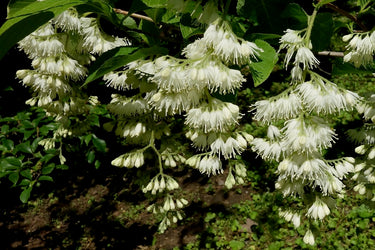
The fragrant epaulette tree is a deciduous tree of twenty to thirty feet in most gardens, spreading and open in habit, and the performance comes in late spring and early summer when long panicles of small white flowers hang from the ends of the branches and scent the air around the tree. Dirr's Manual of Woody Landscape Plants puts the case plainly: "the flowers are extremely handsome and develop when a limited number of plants are offering color." That timing is much of the value. By June most of the flowering trees have finished and the garden has gone green, and this one is only starting.
This is the second of the two epaulette trees we grow, and the pair make an instructive comparison. Both hang their flowers in fringed drooping panicles, which is where the common name comes from, the resemblance being to the fringed shoulder boards of a dress uniform. Where the little epaulette tree, Pterostyrax corymbosus, is smaller in every dimension, this species is the larger and heavier-flowered of the two, with panicles that can run to nine inches. The genus name comes from the Greek pteron, a wing, and styrax, for the related storax, and the wing refers to the fruit; the epithet hispidus means bristly, for the small ribbed fruits that follow the flowers covered in stiff hairs. So the two species are named for two different features of the same curious little fruit.
A correction to our own older listing, since we would rather fix a thing than repeat it: this species is native to both China and Japan rather than to Japan alone. Pterostyrax belongs to Styracaceae, the storax family, which also holds the snowbells and the American silverbells, Halesia. There is no ethnobotanical tradition worth reporting, no medicine, timber or food use of consequence. Bees work the panicles hard while they last, which in a June garden is a genuine service.
Plant the fragrant epaulette tree in moist but well-drained soil, in full sun for the heaviest flowering, and give room for a spreading crown. As with the smaller species, think about the sightline before planting: these panicles hang, so a position above a path, at the top of a slope, or where the tree can be looked into from a deck repays far more than the same tree set flat where the flowers end up overhead. Shelter from hard wind. Hardy through USDA zones 5 to 8. Prune in late winter only to shape the young frame, and be patient, since a young tree takes a few years to settle into heavy flowering.
Photos courtesy of Arb O'Retum and Owen Johnson
- Hardiness
- USDA Zones 5–8
- Sun
- Full Sun, Part Shade
- Soil
- Well-drained, Moist
- Mature size
- Height 20–30 Feet · Spread 15–25 Feet
- Growth rate
- Moderate
- Seasonality
- Deciduous
Long drooping panicles of small fragrant white flowers in late spring and early summer, followed by bristly ribbed fruits
From rooting to shipping, our top priority is ensuring you receive healthy, thriving plants for your garden’s success.
Because most of our plants are grown from rooted cuttings — alongside seed, air layering, and grafting chosen for each variety — you receive a stronger, true-to-type plant that establishes quickly in your garden.
Raised on organic soil blends and eco-friendly pest management — never harsh chemicals — your plant arrives healthy for your garden, your family, and the pollinators they feed.
Every purchase gives back. We donate to the Aiken Arboretum and support local wildlife conservation, so growing your garden helps protect the wider ecosystem too.

All our plant material is carefully propagated, grown, and nurtured at our humble nursery in Aiken, South Carolina.

Your plant arrives carefully packed and ready to settle in. Unpack them promptly, give them a day or two to acclimate, then plant following the notes we include — that’s all it takes. Clear care guidance comes with every order, so success is the easy part.
What to expect upon delivery
All our plants are sold in 1-gallon sizes, though the height of each plant can vary depending on its growth rate and seasonality, typically ranging from 1/2 to 2.5 feet.
Each plant is carefully packaged with its roots enclosed in a secure plastic bag containing moist soil, forming a compact root ball. To ensure safe transport, the box is padded with recycled newspaper, providing both stability and eco-friendly protection from weather during shipping.
What is your return policy?
Review our full return policy information on our SHIPPING AND RETURNS POLICY page.
What payment methods can I use?
We offer 35 different payment methods including major providers like Mastercard, Visa, PayPal, American Express and Diners as well as many different local payment methods including Klarna, iDEAL, AliPay, Sofort, giropay, and many more.
Can I make changes to my order after it’s been placed?
At Woodlanders, we strive to fulfill orders as quickly as possible. Therefore, we can only accommodate changes to your order within the first 24 hours after it has been placed. These changes include adding or removing products and modifying the delivery address. If you need to make any changes or if there has been a mistake with your order information, please reach out to us promptly via our CONTACT page with your order number for the quickest resolution.
Your satisfaction is our priority, and we appreciate your understanding and cooperation.