



Woodlanders Journal
Shaping Your Landscape
Learn more about our design vision and curation for these sets, including the landscape methodology that shapes them.
On succession, structure, ecological layering, and why the best landscapes are composed for life, not merely for installation day.
“A garden can be romantic and rigorous. It can hold history, support life, and still feel deeply considered.”

I. Inheritance & evolution
An old nursery, spoken in the present tense
There is a difference between putting plants together and composing a landscape. The first is easy enough. A person can gather what is blooming, what is available, what catches the eye in the moment, and call it a garden. Sometimes that even works, for a season. But the landscapes that stay with us—the ones that feel inevitable, generous, deeply alive—are rarely built on impulse alone. They are shaped by vision. By patience. By an understanding that a garden is not a still life, but a living sequence of events.
At Woodlanders, that understanding has always been close to the heart of what we do. For nearly fifty years, Woodlanders has been known as a nursery of botanical depth: a place with reverence for rare plants, old stories, and species of unusual character. Ours is a history shaped not by trend, but by curiosity—a willingness to look more closely, to honor the peculiar, the storied, the regionally resonant, and the horticulturally significant.
That spirit remains. But every nursery that lives long enough must also decide how it will speak in the present tense. This newer chapter of Woodlanders is rooted in the belief that beauty alone is no longer enough—not because beauty matters less, but because it can now do more. A garden can be beautiful and ecologically functional. It can be romantic and rigorous. It can hold history, support life, and still feel deeply considered.
That is the landscape point of view shaping our garden sets, and it is also the design voice Fiona brings to the nursery: fresh, literate, ecologically minded, and unafraid to insist that planting design should have both feeling and purpose.
Design conviction
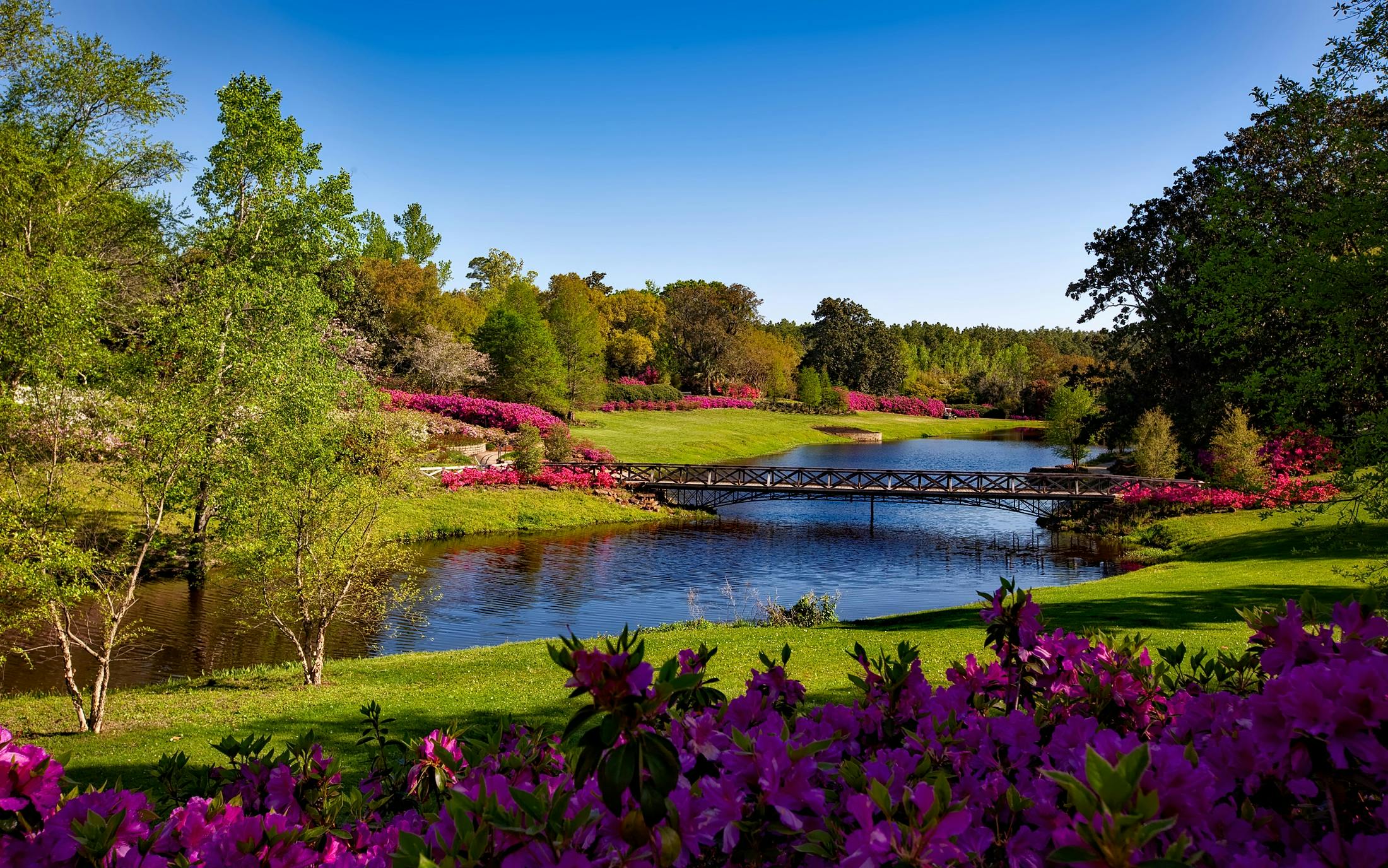
We are not interested in gardens that peak for a photograph and collapse into confusion by August.
We are interested in landscapes that carry themselves through time: with structure, seasonal handoff, ecological usefulness, and enough compositional intelligence to age well.
II. The design idea behind the sets
Our sets are not shortcuts around design. They are design, distilled.
The sets grew out of one central conviction: a thoughtfully curated garden should feel more accessible without becoming shallow. They are not bundles assembled for convenience alone, nor are they merely beginner-friendly collections meant to remove decisions from the process. They are designed plant communities—small but meaningful compositions that express the same ideas we believe matter in larger landscape work: ecological layering, bloom succession, long-term maturity, and maintenance that is thoughtful rather than exhausting.
A customer does not need to understand every principle of succession planting on the day they begin. They do, however, deserve access to a composition that has been thought through on their behalf—one with a real rationale, a sense of timing, a relationship between heights and forms, and a reason for being in the garden beyond prettiness.
Mini guide
A planting set should answer four questions at once: What anchors the composition? What extends the season? What supports life? What will still make sense in year three?
III. The principles we design by
Succession. Layering. Maturity. Maintenance.
Bloom succession: a garden should have an early gesture, a middle voice, and a late-season resolve
A good planting should do more than flower well for a month. It should move through time with grace. It should hold together when one thing is peaking and another is resting. It should offer nectar when nectar is needed, structure when structure matters, and enough clarity of form that the eye understands where to land even in the quiet months.
The question is not simply, “What will look good in May?” but “What will this place feel like in August, in October, in the first dry spell, in the third year?”
Ecological layering: not just planting for wildlife, but composing with relationships
In some corners of horticulture, ecological planting and aesthetic refinement are still spoken of as though they are in opposition. We reject that entirely. Some of the most compelling landscapes being made now are the ones that understand ecology as a design language rather than a constraint.
Ecological layering asks the designer to think in strata and relationships: ground, middle, canopy; bloom, seed, stem; nectar, nesting, cover; the seen and the unseen.
Long-term maturity: plants must be imagined as adults
One of the quietest failures in planting design is the failure to imagine plants as adults. Too often a composition is built around pot size, not mature habit; around installation day, not year three. But plants do not remain where we freeze them. They move outward, upward, into one another. They lean, seed, disappear, return, form alliances, cast shade, create pressure, offer relief.
To design well is to design for the life ahead of the planting, not for its temporary juvenile neatness.
Maintenance: the most elegant gardens are designed to age with dignity
Maintenance, in our view, is not simply about reducing labor. It is about designing with enough foresight that the ongoing care feels meaningful rather than punishing. A planting that requires constant correction may still be beautiful, but it is often beautiful in a brittle way.
We are interested in landscapes that ask for stewardship rather than endless intervention.

IV. What this looks like in practice
Three sets, three registers of the same philosophy
The Pollinator Set is built as a sequence of roles, not just a sequence of bloom: the early cheer of Coreopsis lanceolata, the summer intensity of Monarda and Pycnanthemum, the architectural lift of Eutrochium fistulosum, the dramatic punctuation of Hibiscus moscheutos, and the final autumn grace of Symphyotrichum oblongifolium.
The Rain Garden Set operates in another register entirely. It is built for sites where moisture is not a problem to be corrected, but a condition to be interpreted. Here, design begins with acceptance of place. Iris virginica gives early poise. Verbena hastata threads the planting vertically. Hibiscus moscheutos lends drama. Boltonia asteroides softens the late season into haze. Vernonia noveboracensis deepens the palette at the edge of autumn. Equisetum hyemale holds the whole thing in a more architectural language.
The Cottage Garden Set may be the clearest expression of how we think romance should function in a modern garden. Cottage planting is often mistaken for looseness without discipline, abundance without editing, nostalgia without structure. But the best cottage gardens are full of internal intelligence: an airy spring anchor, a grass that stitches the composition together, a fragrant middle register, and a late golden finish.
V. A way of seeing
How to apply this methodology in your own garden
For the gardener standing at home, wondering how to apply this thinking without formal training, the starting point is simpler than it may seem. Begin not by asking what you like, but what the place is asking for. Is it dry or damp? Exposed or sheltered? Hot in the afternoon or softened by trees? Does it need height, softness, seasonality, habitat, restraint?
Then consider the emotional register you want the space to hold. Romantic? Wild-edged? Grounding? Luminous? Pollinator-loud? Once those two things are clear—site and feeling—you can begin to build like a designer.
The Woodlanders method, in brief
1. Read the site. Light, moisture, exposure, and scale come first.
2. Define the feeling. Decide what emotional register the planting should hold.
3. Build structure first. Choose the plants that anchor the composition physically or visually.
4. Layer in succession. Ask who opens the season, who carries it, and who closes it well.
5. Add ecological usefulness. Think about nectar, seed, cover, movement, and habitat.
6. Design for real life. Imagine year three, not merely week one.
That, more or less, is the methodology. Not a formula. Not a listicle. A way of seeing.

VI. Design notes
Questions readers may still have
Are the sets only for beginners?
No. They are accessible enough for a beginner to enter with confidence, but they are designed with enough intelligence and compositional rigor to satisfy a more landscape-minded gardener as well.
Do these sets replace a full landscape plan?
Not necessarily. Think of them as highly resolved planting moments: distilled design thinking that can stand alone or become part of a broader landscape composition.
Why talk so much about maintenance in a design article?
Because maintenance is not separate from design. A planting that cannot live well in a real life is incomplete, no matter how lovely it looks on paper.
What makes Fiona’s voice distinct in this next era of Woodlanders?
It is a point of view that honors the nursery’s legacy of botanical depth while speaking more directly to contemporary questions: ecological function, compositional clarity, affordability, and the desire for gardens that feel both storied and alive.
What do you most hope a reader takes from this?
That gardens are not furnished; they are composed. And that beauty becomes more compelling—not less—when it is shaped with ecological purpose, seasonal intelligence, and long-term vision.
Closing thought
Woodlanders has spent decades introducing botanical legends. This newer era is about shaping where those legends belong.
That is the vision behind the sets. That is the design point of view. And, increasingly, that is the landscape we want to help people make.
Explore the garden sets, study the planting maps, and begin with one meaningful composition. Good design does not ask you to know everything on day one. It asks only that you begin with intention.


