

Medicinal

Yerba Mate

Ilex paraguariensis

$23.00
1 Gallon USDA Zones 8–10 Full Sun and Part Shade Matures 10–30 Feet
1 in stock

Pickup available at Aiken Nursery

Usually ready in 2-4 days

Healthy-arrival guarantee Free shipping over $150
Roots wrapped in moist soil and padded for safe transit
Grown and shipped from our nursery in Aiken, SC
Shipping later in the season? Schedule your delivery date in your cart.

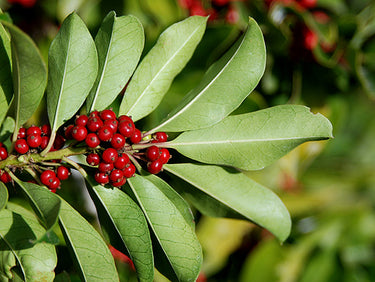
Ilex paraguariensis, commonly known as Yerba Mate, is a broadleaf evergreen holly native to South America and best known as the traditional source of the energizing herbal beverage enjoyed throughout Brazil, Paraguay, Uruguay, and Argentina. Closely resembling the native Dahoon Holly (Ilex cassine) of the southeastern U.S., this attractive shrub or small tree offers both ornamental appeal and cultural significance.

A book written in the 1930's commented that Mrs. Phelps had a Woodlanders' yerba mate specimen in her garden - though lost over the years.

While not yet widely cultivated in North America, Yerba Mate shows promise as a unique ornamental plant in warmer regions of the southern U.S., especially where gardeners appreciate plants with global ethnobotanical relevance. Its glossy green leaves, upright habit, and evergreen nature make it a distinctive addition to edible landscapes, cultural gardens, or collector’s gardens focused on medicinal or economically important plants.

Plant in fertile, well-drained soil and choose a sunny location for best growth. In suitable climates, it may also be harvested for homegrown Yerba Mate tea.

Will this plant thrive in your zone?

Explore this plant’s medicinal profile
Plant Profile
At a glance
Hardiness
USDA Zones 8–10
Sun
Full Sun, Part Shade
Soil
Well-drained, Acid
Mature size
Height 10–30 Feet · Spread 6–10 Feet
Growth rate
Moderate
Seasonality
Evergreen
Flower, Fruit & Foliage

Foliage: The leaves are dark green, leathery, and elliptic, with serrated edges, providing a dense, evergreen appearance year-round.

Flowers: Produces small, white flowers in late spring to early summer, followed by small, red berries in the fall if both male and female plants are present.

Care

Read our full care guide

Light Requirements: Prefers partial shade to full sun. Ilex paraguariensis thrives in locations with filtered sunlight or light shade, especially during the hottest part of the day. It can tolerate full sun, particularly in cooler climates, but in its natural environment, it often grows under the canopy of larger trees, so some protection from intense sunlight is beneficial.

Soil Requirements: Prefers well-draining, acidic soil. Ilex paraguariensis grows best in fertile, loamy soil with a pH range of 4.5-6.0. It can adapt to various soil types, including sandy and clay soils, as long as they are well-draining. The plant prefers soil that is rich in organic matter, so incorporating compost or other organic materials will help improve soil fertility and structure.

Watering: Requires regular watering. Ilex paraguariensis prefers consistently moist soil, particularly during the growing season. It does not tolerate drought well, so regular watering is essential, especially in dry periods. However, the soil should not be waterlogged, as this can lead to root rot. Mulching around the base of the plant can help retain moisture and regulate soil temperature.

Temperature and Humidity: Hardy in USDA zones 8-10. Ilex paraguariensis is native to subtropical regions and thrives in warm, humid environments. It is frost-sensitive and should be protected from temperatures below 30°F (-1°C). In cooler climates, it is often grown in containers that can be moved indoors during the winter months. High humidity is ideal for this plant, mimicking its natural habitat.

Fertilization: Apply a balanced, slow-release fertilizer in early spring to encourage healthy growth. During the growing season, additional applications of a liquid fertilizer every 4-6 weeks can help sustain the plant’s vigor. Organic fertilizers, such as compost tea or well-rotted manure, are also beneficial and can be applied annually to maintain soil fertility.

Pruning: Prune lightly in late winter or early spring to maintain shape and encourage bushier growth. Ilex paraguariensis can grow into a large shrub or small tree, so regular pruning helps keep it manageable and promotes a more compact, bushy form. Pruning also helps maintain the health of the plant by removing dead or damaged branches.

Pests and Problems: Generally pest-resistant but may occasionally be affected by common garden pests such as aphids or spider mites. Ensuring good air circulation around the plant can help prevent fungal diseases like leaf spot. If pests or diseases are detected, treat with insecticidal soap or neem oil. Regular inspection and proper garden hygiene are key to maintaining plant health.

Medicinal & Traditional Use
Traditional profile
Tradition
Adaptogen (mild): Helps the body adapt to stress and maintain balance, Cardioprotective: Supports cardiovascular health, Diuretic: Increases urine flow, Hypoglycemic: Helps regulate blood sugar levels, Stimulant: Enhances alertness, energy, and mental function
Parts used
Leaves (primary): Used fresh or dried for infusions and extracts., Stems: Occasionally included in traditional preparations but have lower active compound concentrations.
Preparation
Infusion (Mate or Chimarrão): The most traditional and widespread method. Dried leaves are steeped in hot (not boiling) water., Cold infusion (Tereré): Popular in Paraguay; consumed cold with herbs for added effects., Tinctures & Extracts: Alcohol-based preparations are used for higher concentrations of active compounds., Capsules/Tablets: Standardized doses used in modern supplements for weight loss or energy enhancement., Topical: Rare, but some traditional applications use poultices for wounds or inflammation.
Active compounds
Caffeine – Central nervous system stimulant, Theobromine – Milder stimulant, found also in chocolate, Chlorogenic acids – Potent antioxidants, involved in glucose regulation, Saponins – Anti-inflammatory and cholesterol-lowering effects, Polyphenols (e.g., quercetin, rutin) – Antioxidant and anti-inflammatory activity, Mate saponins (ursolic and oleanolic acid derivatives) – Unique to yerba mate, linked to metabolic benefits
Research evidence
4 / 5
Traditional uses
Detoxification & CleansingDigestive HealthImmune SupportHeart Support
History & tradition

Ilex paraguariensis is native to subtropical South America (Paraguay, Argentina, Brazil, and Uruguay), and has been used for centuries by the indigenous Guaraní and Tupi peoples. Traditionally, yerba mate was consumed as a stimulant, digestive aid, and general tonic. The name "Yerba Mate" derives from the typical preparation of the leaves as a tea-like infusion known as “mate,” drunk both in social conventions and at rituals. The mate preparation was believed to sustain energy, suppress hunger, and promote mental clarity.

Yerba mate became deeply embedded in colonial and national identities in South America, eventually expanding globally for its perceived wellness benefits.

References & research

Brusco, M. J. et al., Journal of Ethnopharmacology (2014)

Heck & de Mejia, Journal of Food Science (2007)

Hilgert, N.I. & Gil, G.E., Journal of Ethnobiology and Ethnomedicine (2007)

Bracesco, N. et al., Journal of Food Science (2011)

USDA Forest Service, Traditional and Modern Uses of Mate (2022)

Please note

These statements have not been evaluated by the Food and Drug Administration. This information is shared for traditional and educational interest only and is not intended to diagnose, treat, cure, or prevent any disease. Please consult a qualified healthcare professional before any medicinal use.

  • Caffeine Sensitivity: Can cause insomnia, jitteriness, increased heart rate, or anxiety in sensitive individuals.
  • Carcinogenic Risk (in high-temperature consumption): Epidemiological studies link extremely hot mate (>65°C) to increased esophageal cancer risk due to thermal injury, not necessarily the herb itself.
  • Drug Interactions: May interfere with MAO inhibitors, blood pressure medications, and stimulants.
  • Pregnancy and Lactation: Not recommended due to caffeine and limited safety data.
  • Contaminants: Non-organic preparations may carry pesticide or PAH (polycyclic aromatic hydrocarbon) residues depending on processing method.
Here’s a closer look at how we produce our plants

From rooting to shipping, our top priority is ensuring you receive healthy, thriving plants for your garden’s success.

Woodlanders Growing Process

Because most of our plants are grown from rooted cuttings — alongside seed, air layering, and grafting chosen for each variety — you receive a stronger, true-to-type plant that establishes quickly in your garden.

Sustainable Growing Practices

Raised on organic soil blends and eco-friendly pest management — never harsh chemicals — your plant arrives healthy for your garden, your family, and the pollinators they feed.

Supporting Local Biodiversity

Every purchase gives back. We donate to the Aiken Arboretum and support local wildlife conservation, so growing your garden helps protect the wider ecosystem too.

At Woodlanders, we are committed to quality.
Grown in Aiken, South Carolina
At Woodlanders, we are committed to quality.

All our plant material is carefully propagated, grown, and nurtured at our humble nursery in Aiken, South Carolina.

Learn more about Woodlanders
Healthy plants, ready to thrive
Success, made simple
Healthy plants, ready to thrive

Your plant arrives carefully packed and ready to settle in. Unpack them promptly, give them a day or two to acclimate, then plant following the notes we include — that’s all it takes. Clear care guidance comes with every order, so success is the easy part.

Read the care guide
Frequently Asked Questions
What to expect upon delivery

All our plants are sold in 1-gallon sizes, though the height of each plant can vary depending on its growth rate and seasonality, typically ranging from 1/2 to 2.5 feet.

Each plant is carefully packaged with its roots enclosed in a secure plastic bag containing moist soil, forming a compact root ball. To ensure safe transport, the box is padded with recycled newspaper, providing both stability and eco-friendly protection from weather during shipping.

What is your return policy?

Review our full return policy information on our SHIPPING AND RETURNS POLICY page.

What payment methods can I use?

We offer 35 different payment methods including major providers like Mastercard, Visa, PayPal, American Express and Diners as well as many different local payment methods including Klarna, iDEAL, AliPay, Sofort, giropay, and many more.

Can I make changes to my order after it’s been placed?

At Woodlanders, we strive to fulfill orders as quickly as possible. Therefore, we can only accommodate changes to your order within the first 24 hours after it has been placed. These changes include adding or removing products and modifying the delivery address. If you need to make any changes or if there has been a mistake with your order information, please reach out to us promptly via our CONTACT page with your order number for the quickest resolution.

Your satisfaction is our priority, and we appreciate your understanding and cooperation.