


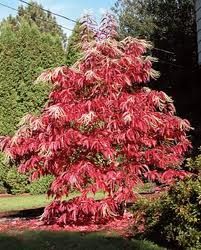

Sourwood
Oxydendrum arboreum
Pickup currently unavailable at Aiken Nursery
Oxydendrum arboreum, the sourwood, is one of the loveliest and most distinctive trees of the Eastern American woods, and among the very last to flower each year. The name tells the story twice over: Oxydendrum joins the Greek oxys, sour or sharp, and dendron, tree, while the common name echoes the same tang, for the leaves, twigs, and bark all taste sourly of oxalic acid when chewed. A member of the heath family alongside azaleas, rhododendrons, and blueberries, sourwood stands alone as the sole species in the genus, native to well-drained, acid woodland soils from southern Pennsylvania to the Florida panhandle and west toward Louisiana, most abundant in the lower Appalachians.
In July and August, when nearly every other native tree has long finished, sourwood hangs the branch tips with drooping, one-sided sprays of small, urn-shaped white flowers, fragrant and shaped like the bells of lily-of-the-valley. The bloom is a magnet for honeybees, and the pale, slow-crystallizing sourwood honey pressed from the flowers ranks among the most prized in America, a signature taste of the southern Appalachians and reason enough on its own to plant the tree.
Long before the honey trade, sourwood served Appalachian and Cherokee households as a folk medicine. Leaf teas were taken for diarrhea and brewed into tonics for indigestion, nervousness, and asthma, while travelers chewed the sour leaves to slake thirst on a long walk. In autumn the lance-shaped leaves turn early and burn crimson to wine-purple, often weeks ahead of the surrounding woods, and the spent flower clusters dry to persistent tan capsules that trace the same drooping curves against the fall color.
Slow-growing and refined, sourwood makes a superb specimen for a lawn, a woodland edge, or a native planting, pyramidal in youth and picturesquely irregular with age. Give full sun for the heaviest bloom and hottest fall color, acid and well-drained soil that never bakes dry, and room away from lawn grass and competing roots, with a mulch to keep the shallow roots cool. Pair the tree with dogwoods, native azaleas, blueberries, and other acid-loving companions, and remember the one firm rule: sharp drainage and an open root run, since sourwood resents both wet feet and crowding.
- Hardiness
- USDA Zones 5–9
- Sun
- Full Sun, Part Shade
- Soil
- Well-drained, Moist
- Mature size
- Height 30–50 Feet · Spread 15–25 Feet
- Growth rate
- Slow
- Seasonality
- Deciduous
White, urn-shaped, fragrant, summer
These statements have not been evaluated by the Food and Drug Administration. This information is shared for traditional and educational interest only and is not intended to diagnose, treat, cure, or prevent any disease. Please consult a qualified healthcare professional before any medicinal use.
- Traditional use only; not clinically evaluated
- Contains oxalic acid; not for those advised to limit oxalates
- Offered for historical interest, not self-treatment
From rooting to shipping, our top priority is ensuring you receive healthy, thriving plants for your garden’s success.
Because most of our plants are grown from rooted cuttings — alongside seed, air layering, and grafting chosen for each variety — you receive a stronger, true-to-type plant that establishes quickly in your garden.
Raised on organic soil blends and eco-friendly pest management — never harsh chemicals — your plant arrives healthy for your garden, your family, and the pollinators they feed.
Every purchase gives back. We donate to the Aiken Arboretum and support local wildlife conservation, so growing your garden helps protect the wider ecosystem too.

All our plant material is carefully propagated, grown, and nurtured at our humble nursery in Aiken, South Carolina.

Your plant arrives carefully packed and ready to settle in. Unpack them promptly, give them a day or two to acclimate, then plant following the notes we include — that’s all it takes. Clear care guidance comes with every order, so success is the easy part.
What to expect upon delivery
All our plants are sold in 1-gallon sizes, though the height of each plant can vary depending on its growth rate and seasonality, typically ranging from 1/2 to 2.5 feet.
Each plant is carefully packaged with its roots enclosed in a secure plastic bag containing moist soil, forming a compact root ball. To ensure safe transport, the box is padded with recycled newspaper, providing both stability and eco-friendly protection from weather during shipping.
What is your return policy?
Review our full return policy information on our SHIPPING AND RETURNS POLICY page.
What payment methods can I use?
We offer 35 different payment methods including major providers like Mastercard, Visa, PayPal, American Express and Diners as well as many different local payment methods including Klarna, iDEAL, AliPay, Sofort, giropay, and many more.
Can I make changes to my order after it’s been placed?
At Woodlanders, we strive to fulfill orders as quickly as possible. Therefore, we can only accommodate changes to your order within the first 24 hours after it has been placed. These changes include adding or removing products and modifying the delivery address. If you need to make any changes or if there has been a mistake with your order information, please reach out to us promptly via our CONTACT page with your order number for the quickest resolution.
Your satisfaction is our priority, and we appreciate your understanding and cooperation.