


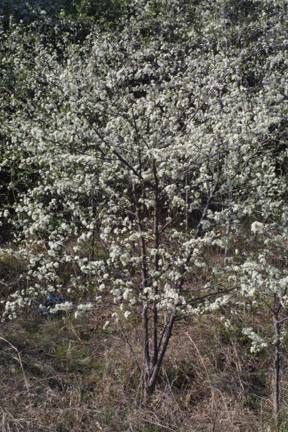

Chickasaw Plum
Prunus angustifolia
See all 10 Cherries, Plums & Laurels
Pickup currently unavailable at Aiken Nursery
A native plum with a longer human history than any other fruit in North America. Prunus angustifolia, the Chickasaw plum, also called Cherokee plum, sand plum, sandhill plum, or Florida sand plum depending on the part of the range you are standing in, was actively cultivated by Indigenous peoples across the southeastern and central United States long before European contact. The Chickasaw, Cherokee, and several other nations carried the species in their orchards and food gardens, dried the fruit for winter storage, and almost certainly moved the plant eastward through pre-Columbian trade networks from what botanists now believe to be the species' true origin further west. The species was so deeply associated with Indigenous cultivation by the time European naturalists arrived that the binomial angustifolia, narrow leaf, eventually displaced earlier names like P. chicasa in formal taxonomy, though the common names kept the tribal attribution. Kansas made the plant its official state fruit in 2022. Few American native fruits carry their human history this visibly.
The plant itself is one of the great early-spring trees of the southeastern landscape. From late February through April, well before most other woody plants have leafed out, bare branches erupt into clouds of small white five-petaled flowers, fragrant and swarmed by every emerging pollinator within range. This is one of the most important early nectar sources in the entire eastern flora: the flowers open at the precise moment when overwintering native bees, queen bumble bees, mason bees, and early butterflies emerge from dormancy and need food before almost anything else is blooming. Without early-spring plums and serviceberries, the native bee community has nowhere to go in the gap between the last winter aconites and the first warm-season flowers. Doug Tallamy's research on native-plant ecological value places the genus Prunus in the top tier of woody natives nationwide, and P. angustifolia hosts more than 380 species of butterfly and moth caterpillars, from the coral hairstreak and eastern tiger swallowtail to the cecropia, polyphemus, imperial, and promethea silkmoths, a list that reads like a roll call of the eastern lepidoptera.
The fruit follows in midsummer. Half-inch drupes ripen from yellow to red, cherry-like in color and slightly tart in the flesh, the kind of small wild fruit that needs cooking to come into its own. Generations of southerners have made Chickasaw plum jelly, preserves, pies, and wine; the fruit dries well, cooks beautifully, and carries a flavor that improved-orchard plums have largely lost to commercial breeding. Birds, foxes, raccoons, and box turtles work the ripening fruit hard, which is why most wild stands lose their crop within days of full ripeness, so pick early or share generously.
The plants offered here are seedlings from a particular late-flowering, late-fruiting clone growing in Aiken County, South Carolina. Late timing is meaningful: it shifts the bloom past the worst frost windows, extends the bloom and fruiting periods relative to the species' typical schedule, and gives gardeners a slightly different window of wildlife support and harvest. The parent clone has been observed at Woodlanders for years, and the seedlings carry forward the genetic tendency toward later phenology while introducing the variability needed for good cross-pollination and resilience.
- Hardiness
- USDA Zones 5–9
- Sun
- Full Sun, Part Shade
- Soil
- Well-drained, Sandy, Acid
- Mature size
- Height 6–10 Feet · Spread 6–10 Feet
- Growth rate
- Moderate
- Seasonality
- Deciduous
Fragrant white flowers on bare branches, late winter to April
These statements have not been evaluated by the Food and Drug Administration. This information is shared for traditional and educational interest only and is not intended to diagnose, treat, cure, or prevent any disease. Please consult a qualified healthcare professional before any medicinal use.
- Bark, leaves, and seeds contain cyanogenic compounds and are toxic in quantity
- Traditional use only, not clinically evaluated
- Consult a professional before use
From rooting to shipping, our top priority is ensuring you receive healthy, thriving plants for your garden’s success.
Because most of our plants are grown from rooted cuttings — alongside seed, air layering, and grafting chosen for each variety — you receive a stronger, true-to-type plant that establishes quickly in your garden.
Raised on organic soil blends and eco-friendly pest management — never harsh chemicals — your plant arrives healthy for your garden, your family, and the pollinators they feed.
Every purchase gives back. We donate to the Aiken Arboretum and support local wildlife conservation, so growing your garden helps protect the wider ecosystem too.

All our plant material is carefully propagated, grown, and nurtured at our humble nursery in Aiken, South Carolina.

Your plant arrives carefully packed and ready to settle in. Unpack them promptly, give them a day or two to acclimate, then plant following the notes we include — that’s all it takes. Clear care guidance comes with every order, so success is the easy part.
What to expect upon delivery
All our plants are sold in 1-gallon sizes, though the height of each plant can vary depending on its growth rate and seasonality, typically ranging from 1/2 to 2.5 feet.
Each plant is carefully packaged with its roots enclosed in a secure plastic bag containing moist soil, forming a compact root ball. To ensure safe transport, the box is padded with recycled newspaper, providing both stability and eco-friendly protection from weather during shipping.
What is your return policy?
Review our full return policy information on our SHIPPING AND RETURNS POLICY page.
What payment methods can I use?
We offer 35 different payment methods including major providers like Mastercard, Visa, PayPal, American Express and Diners as well as many different local payment methods including Klarna, iDEAL, AliPay, Sofort, giropay, and many more.
Can I make changes to my order after it’s been placed?
At Woodlanders, we strive to fulfill orders as quickly as possible. Therefore, we can only accommodate changes to your order within the first 24 hours after it has been placed. These changes include adding or removing products and modifying the delivery address. If you need to make any changes or if there has been a mistake with your order information, please reach out to us promptly via our CONTACT page with your order number for the quickest resolution.
Your satisfaction is our priority, and we appreciate your understanding and cooperation.