




Louisiana Sweetbay
Magnolia virginiana ludoviciana
Pickup currently unavailable at Aiken Nursery
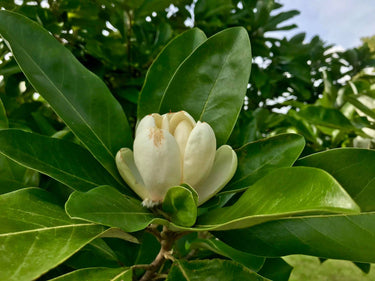
Sweetbay is one of the loveliest and most useful of the native magnolias, and this is Sweetbay from the far western edge of the range, the big-leaved, big-flowered form of the Louisiana and east Texas country long known in gardens as Magnolia virginiana ludoviciana. Set against the typical species, these western-Gulf plants carry noticeably larger leaves and flowers, with soft down on the undersides of the leaves and on the flower buds, and grow as small to medium trees of a more open, airy habit.
A word of honesty on the name, since a curious gardener will go looking: ludoviciana is a horticultural rather than a formally accepted botanical name, and today's taxonomists fold these Louisiana plants into the southern variety australis or simply into the species itself. Distinct in the garden, if not in the current books. The species carries real history: sweetbay was among the very first American trees grown in Europe, sent from Virginia in the late 1600s by the missionary-naturalist John Banister to Bishop Compton's London garden, the first magnolia known to European cultivation. Virginiana honors Virginia, where Banister collected; ludoviciana means simply of Louisiana.
The flowers are the point in early summer: creamy-white, cupped, and powerfully lemon-scented, opening a few at a time over weeks and closing at night, followed by cone-like clusters of scarlet-seeded fruit that draw birds in fall. The leaves flash silver-white undersides in every breeze. Sweetbay is a creature of swamp and streambank, happy with wet feet where other magnolias drown, yet adaptable to ordinary moist garden soil, and this warm-provenance form is best in USDA zones 7 to 9, evergreen in the Deep South and semi-evergreen to deciduous in colder winters.
The aromatic bark earned sweetbay the old name swamp sassafras, and a genuine early-American medicine: colonists and Native peoples steeped the bitter, spicy bark and seed cones as a tonic and diaphoretic for colds, fevers, and rheumatism. The tree is a host as well, feeding the caterpillars of the eastern tiger swallowtail and the sweetbay silkmoth. Plant this magnolia where the lemon fragrance and silver leaves will be met close at hand, at a pond edge, a low wet corner, or a courtyard, and enjoy a distinctive Gulf-Coast form of a classic native tree.
Photos courtesy of Kris Stone at the Boone County Arboretum
- Hardiness
- USDA Zones 7–9
- Sun
- Full Sun, Part Shade
- Soil
- Moist, Well-drained
- Mature size
- Height 20–35 Feet · Spread 15–20 Feet
- Growth rate
- Medium
- Seasonality
- Semi-Evergreen
Large, creamy-white, lemon-scented flowers, early summer
These statements have not been evaluated by the Food and Drug Administration. This information is shared for traditional and educational interest only and is not intended to diagnose, treat, cure, or prevent any disease. Please consult a qualified healthcare professional before any medicinal use.
- Traditional and historical use only; not a proven remedy.
- Not a substitute for professional medical care; consult a qualified practitioner before use.
From rooting to shipping, our top priority is ensuring you receive healthy, thriving plants for your garden’s success.
Because most of our plants are grown from rooted cuttings — alongside seed, air layering, and grafting chosen for each variety — you receive a stronger, true-to-type plant that establishes quickly in your garden.
Raised on organic soil blends and eco-friendly pest management — never harsh chemicals — your plant arrives healthy for your garden, your family, and the pollinators they feed.
Every purchase gives back. We donate to the Aiken Arboretum and support local wildlife conservation, so growing your garden helps protect the wider ecosystem too.

All our plant material is carefully propagated, grown, and nurtured at our humble nursery in Aiken, South Carolina.

Your plant arrives carefully packed and ready to settle in. Unpack them promptly, give them a day or two to acclimate, then plant following the notes we include — that’s all it takes. Clear care guidance comes with every order, so success is the easy part.
What to expect upon delivery
All our plants are sold in 1-gallon sizes, though the height of each plant can vary depending on its growth rate and seasonality, typically ranging from 1/2 to 2.5 feet.
Each plant is carefully packaged with its roots enclosed in a secure plastic bag containing moist soil, forming a compact root ball. To ensure safe transport, the box is padded with recycled newspaper, providing both stability and eco-friendly protection from weather during shipping.
What is your return policy?
Review our full return policy information on our SHIPPING AND RETURNS POLICY page.
What payment methods can I use?
We offer 35 different payment methods including major providers like Mastercard, Visa, PayPal, American Express and Diners as well as many different local payment methods including Klarna, iDEAL, AliPay, Sofort, giropay, and many more.
Can I make changes to my order after it’s been placed?
At Woodlanders, we strive to fulfill orders as quickly as possible. Therefore, we can only accommodate changes to your order within the first 24 hours after it has been placed. These changes include adding or removing products and modifying the delivery address. If you need to make any changes or if there has been a mistake with your order information, please reach out to us promptly via our CONTACT page with your order number for the quickest resolution.
Your satisfaction is our priority, and we appreciate your understanding and cooperation.