




American Plum
Prunus americana
1 Gallon | Hardiness Zones 3-8
efore European settlement reshaped the eastern landscape, Prunus americana was a fixture at the forest edge: thicket-forming, thorny, and extravagantly beautiful in early spring when it covered itself in white flowers before the leaves had even stirred. The Lakota called it kañta, the Cherokee gunasdv, and across dozens of nations from the Great Plains to the Appalachians it was considered a plant of genuine importance. The fruits were eaten fresh, dried into cakes, and incorporated into pemmican, the dense, calorie-rich mixture of dried meat, fat, and fruit that sustained people through long winters and longer journeys. The inner bark was used medicinally. The wood, dense and close-grained, was worked into tools. This was not an ornamental plant in the minds of the people who knew it first. It was a resource, in the fullest sense.
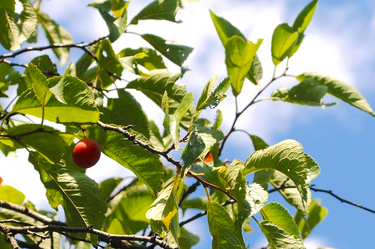
What it has always been, regardless of who is looking, is spectacular in flower. The blooms open in mid-spring on bare branches that are dense, flat-topped clusters of fragrant white flowers that smother the plant before a single leaf appears, attracting native bees and early pollinators at the precise moment when they most need foraging. The plums ripen in early summer to clusters of round, red fruit — sour-skinned and sweet-fleshed, edible fresh and excellent processed into jams and preserves. Birds find them reliably. So do people who know to look.
Prunus americana is a thicket-forming small tree, suckering steadily to form dense colonies, occasionally thorny enough to be genuinely impenetrable, and broadly tolerant of difficult conditions. It grows across a remarkable range, from Saskatchewan to Florida, which speaks to an adaptability earned over millennia rather than selected for in a nursery. If you want something with deep roots in this continent's ecology, literally and otherwise, this is it.
Photo courtesy of Rick Webb.
Pickup currently unavailable at Aiken Nursery
Schedule Delayed Shipping in your Cart
Plant Specs
- Zones: 3 - 8
- Sun: Full Sun and Part Shade
- Soil: Well-drained
- Height at Maturity: 10 - 20 Feet
- Spread at Maturity: 10 - 15 Feet
- Growth Rate: Moderate
Deciduous
Flower/Foliage
Care Info
Here’s a closer look at how we produce our plants:
From rooting to shipping, our top priority is ensuring you receive healthy, thriving plants for your garden’s success.

The majority of our plants are carefully cultivated from rooted cuttings, while we also utilize propagation methods such as seed, air layering, and grafting, thoughtfully chosen to suit each plant’s unique needs.

Our plants are cultivated using sustainable practices, including organic soil blends and eco-friendly pest management, ensuring they thrive while minimizing environmental impact.

We are proud to contribute to local biodiversity through ongoing donations to the Aiken Arboretum and support for local wildlife conservation efforts, helping to preserve and enhance our community’s natural ecosystems.
Frequently Asked Questions
What to expect upon delivery
All our plants are sold in 1-gallon sizes, though the height of each plant can vary depending on its growth rate and seasonality, typically ranging from 1/2 to 2.5 feet.
Each plant is carefully packaged with its roots enclosed in a secure plastic bag containing moist soil, forming a compact root ball. To ensure safe transport, the box is padded with recycled newspaper, providing both stability and eco-friendly protection from weather during shipping.
What is your return policy?
Review our full return policy information on our SHIPPING AND RETURNS POLICY page.
What payment methods can I use?
We offer 35 different payment methods including major providers like Mastercard, Visa, PayPal, American Express and Diners as well as many different local payment methods including Klarna, iDEAL, AliPay, Sofort, giropay, and many more.
Can I make changes to my order after it’s been placed?
At Woodlanders, we strive to fulfill orders as quickly as possible. Therefore, we can only accommodate changes to your order within the first 24 hours after it has been placed. These changes include adding or removing products and modifying the delivery address. If you need to make any changes or if there has been a mistake with your order information, please reach out to us promptly via our CONTACT page with your order number for the quickest resolution.
Your satisfaction is our priority, and we appreciate your understanding and cooperation.