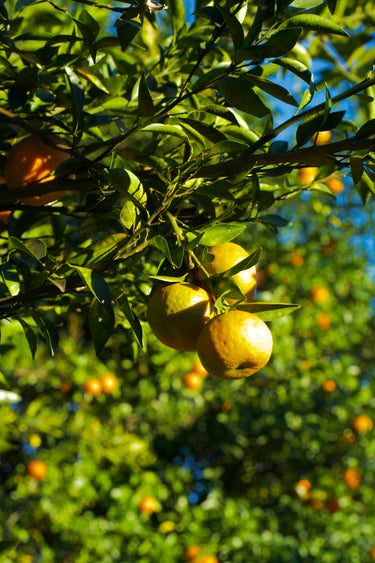
Field Guide · Cold-Hardy Citrus · Zones 7–9
Oranges Where Oranges Have No Business Growing
A working field guide to choosing, siting, and actually keeping citrus alive north of the citrus belt: the hardiness ladder, the three families that make it possible, and the trees that fruit through a Carolina winter.

There is a particular kind of Southern gardener who has made peace with the idea that citrus is somebody else's privilege. Florida's, maybe, or California's. They grow a Meyer lemon in a pot, haul it inside every November, and spend the winter watching it drop leaves against a cold window, and they call that citrus growing, because the alternative is admitting they don't do it at all.
This guide is for the moment that gardener finds out they were misinformed. Citrus, as a family, is far more cold-tolerant than the postcards let on. Not all of it, and not without judgment. But a real and growing roster of citrus will live in the open ground through a zone 7 or zone 8 winter, set fruit, and ask for remarkably little in return. The trick is knowing which ones, and understanding that "cold-hardy citrus" is not a single thing but a spectrum, with a deciduous, thorny, frankly unfriendly little tree holding down the cold end and the supermarket fruit you actually want clustered nervously at the warm end.
Knowing where a given tree sits on that spectrum, and what you are willing to do to nudge it a few degrees colder, is the entire game. So let's lay the spectrum out.
In this guide
IHow Cold-Hardy Citrus Actually Works
Everything in cold-hardy citrus traces back to one stubborn ancestor: Poncirus trifoliata, the trifoliate orange. It is barely citrus to look at: deciduous, viciously thorned, with three-part leaves and small, fuzzy, seed-stuffed fruit that no sane person eats out of hand. What it has, in abundance, is cold tolerance. Established trifoliate orange shrugs off temperatures down toward 0°F, sometimes lower. It goes fully dormant in winter, which is the secret the evergreen citrus never learned: you cannot freeze a tree that has already shut itself down for the season.
Nearly every cold-hardy citrus of any real eating quality is, somewhere in its parentage, a compromise between trifoliate orange's iron constitution and the flavor of true citrus. Cross trifoliate with a sweet orange and you get a citrange. Cross it with a grapefruit and you get a citrumelo. These hybrids inherit a useful share of the toughness while losing some of the unfriendliness, and they serve double duty, because the same genetics that let a citrange survive a hard freeze also make it the rootstock of choice for grafting tenderer citrus. When you buy a cold-hardy citrus tree, the cold-hardiness story is usually told twice: once in the fruiting variety on top, and once in the trifoliate-derived rootstock below.
You cannot freeze a tree that has already shut itself down for the winter. That single fact, dormancy, is what separates citrus that survives from citrus that merely hopes.
Two distinctions will save you a great deal of disappointment. The first: surviving a temperature and fruiting reliably are not the same thing. A tree may take 8°F to the wood and live, then need three frost-free seasons to rebuild enough canopy to flower. The second: maturity is everything. The hardiness numbers you see quoted almost always describe an established tree with a developed root system. A first-winter seedling is a far softer creature, and its first two winters are an investment you make deliberately. Hold both ideas in your head and the rest of this guide makes sense.
IIThe Hardiness Ladder
Here is the spectrum, coldest to warmest. Read it less as a promise than as a way to locate any citrus you encounter, because every "is it hardy?" question is really a question about which rung a tree sits on, and what you are prepared to do to move it one rung colder.
~0°F
Trifoliate orange & its closest hybrids. Poncirus itself, and the toughest citranges/citrumelos. Deciduous or near it. The bedrock, and the rootstock.
5–10°F
Citranges, citrumelos, the USDA hybrids. Swingle, Dunstan, Morton, Benton, US-119, US-1516. Survive hard freezes established; fruit ranges from juicing-grade to genuinely good.
8–12°F
Yuzu, Ichang lemon & the papeda line. Mountain citrus carrying Citrus ichangensis blood. The most cold-hardy citrus you'd actually want to cook with.
12–18°F
Kumquats & the hardy mandarins. Nagami, Meiwa, Changsha, Keraji, Satsuma types. The sweet spot where real fruit meets real toughness in zone 8.
18–22°F
The “-quats” & calamondin. Limequats, citrangequats, mandarinquats. Marginal in ground in zone 8; superb in containers everywhere.
25–28°F
Meyer lemon, Rangpur, sweet oranges. The fruit everyone wants and the cold tolerance nobody hoped for. Pot them, and bring them in.
Field Note · The Aiken Citrus Collection
Woodlanders has been pushing the cold limits of citrus in the Carolina sandhills since 1980, and there are now better than twenty species of citrus in the ground around Aiken: a forty-year field trial conducted, as the best ones usually are, mostly out of curiosity. The varieties below are the ones that earned their place.
IIIFamily I · The Trifoliate Hybrids
This is the cold end made palatable. Citranges (trifoliate × sweet orange) and citrumelos (trifoliate × grapefruit) are the most reliably hardy citrus that produce usable fruit, and they double as the rootstock that makes everything tenderer possible. Expect tart, aromatic, often seedy fruit that rewards the juicer, the marmalade pot, and the cook more than the lunchbox. A few have crept genuinely close to dessert quality.

Citrus 'Swingle'
Citrumelo · Grapefruit × Trifoliate
The famous one. A Walter Swingle citrumelo that became one of the world's most important citrus rootstocks, and a perfectly serviceable fruiting tree in its own right. Vigorous, productive, and tart enough to make a grapefruit flinch. Hardy into the single digits once established.
Zones 7b–9Hardy ~8°FLarge ShrubJuicing & Marmalade

Citrumelo 'Dunstan'
Citrumelo · Grapefruit × Trifoliate
The citrumelo for people who don't think they like citrumelos. 'Dunstan' is among the sweetest, least resinous of the trifoliate hybrids, closer to a true grapefruit in the glass than anything else on this rung, with the cold tolerance of its tough parentage intact.
Zones 7b–9Hardy ~10°FLarge ShrubBest Eating Citrumelo
Citrus 'Morton', 'Benton' & 'Rusk'
Citranges · Sweet Orange × Trifoliate
The citrange bench. 'Morton' and 'Benton' both lean toward orange flavor with citrange tartness underneath; 'Rusk' is the old reliable, hardy and heavy-bearing. None are mistaken for a navel, all are excellent in the kitchen, and each carries the constitution to take a hard zone-8 freeze in stride.
Zones 8–9Hardy 8–12°FCooking & Juice
The USDA cold-hardy numbers: US-119, US-1516, Citrus 942
If you've seen citrus sold by a number rather than a name, you've met the USDA breeding program. Selections like US-119 (a complex citrumelo-sweet orange cross), US-1516, and Citrus 942 (a Sunki mandarin × Flying Dragon trifoliate cross released in 2010) came out of decades of work toward disease resistance, vigor, and cold tolerance. Several have turned out to be excellent dooryard trees north of Florida: strong, hardy, productive, and still uncommon enough that growing one feels like being let in on something. They earn their place on the cold rungs and bring better fruit quality than the old citranges they descend from.
IVFamily II · The Kumquat Clan
If the trifoliate hybrids are toughness in search of flavor, the kumquats are flavor that happens to be tough. Fortunella, the kumquats and their many hybrid “-quat” offspring, gives you the rare combination of fruit you eat whole, skin and all, on a plant that takes a real zone-8 freeze without flinching. This is, for most Southern gardeners, the sweet spot.

Meiwa & Nagami Kumquat
Fortunella · The Whole-Fruit Citrus
The two kumquats to know. Nagami is the classic oval kumquat: bracing, sour-sweet, the one that teaches you to eat the peel and spit nothing out. Meiwa is rounder and noticeably sweeter, the better fresh-eating fruit. Both are among the hardiest truly edible citrus in cultivation, holding to roughly 15–18°F, and both make handsome, glossy, manageable shrubs.
Zones 8–9Hardy ~15°FEat WholeContainer-Friendly

Thomasville Citrangequat
Citrangequat · Citrange × Kumquat
A three-way hybrid and one of the genuinely great cold-hardy citrus: kumquat sweetness, citrange backbone, trifoliate toughness. Young fruit is limelike; fully ripe, it sweetens enough to eat off the tree, peel and all. Among the hardiest of the “-quats,” and a Woodlanders favorite for good reason.
Zones 8–9Hardy ~10°FEat Whole When Ripe
The Limequats & Mandarinquats
Eustis · Lakeland · Indio · Sunquat
The kumquat's hybrid children, each splicing whole-fruit charm onto something new. Eustis and Lakeland limequats deliver true lime flavor on a hardier plant than any lime. Indio Mandarinquat brings mandarin sweetness in a teardrop fruit. Sunquat, a lemon-kumquat, is the forgotten hybrid worth rediscovering. All are marginal in open ground in zone 8 and superb in containers anywhere.
Zones 8b–9Hardy 18–20°FBest in Pots Up North
VFamily III · The Mandarins & the Papeda Line
This is where cold-hardy citrus stops apologizing. The hardy mandarins and the papeda-line citrus give you fruit that needs no caveats: fragrant, useful, in some cases excellent, on trees that take a zone-8 winter, and a few that reach into zone 7. If you want one citrus that proves the whole proposition, it lives in this family.

Yuzu Ichandrin
Papeda Hybrid · Ichang papeda × Satsuma
The cold-hardy citrus that has crossed over into serious cooking, and deservedly. A mountain hybrid hardy to 10°F and lower in established trees, with an aroma (floral, piney, electric) that no blend of lemon and lime gets near. Not a fruit you eat out of hand; a fruit you build a dish around. We've written its full story separately.
Zones 7–9Hardy 10°FKitchen Essential

Ichang “Lemon”
Papeda Hybrid · Citrus ichangensis line
One of the hardiest lemon-like citrus there is, a papeda hybrid carrying the cold genes of Citrus ichangensis, which grows wild in the mountain gorges of central China. Fragrant, lemon-yellow, juicy enough to use like a lemon, on a plant that laughs at a frost that would end a real lemon. A perennial best-seller, and no mystery why.
Zones 7b–9Hardy ~10°FUse Like a Lemon

Changsha & Keraji Mandarins
Citrus reticulata · The Hardy Mandarins
Proof that “hardy” and “delicious” are not opposites. Changsha is a loose-skinned, seedy, intensely sweet mandarin hardy into the mid-teens. Eat it standing over the sink. Keraji, a Japanese mandarin hybrid, is a connoisseur's fruit: complex, lemony-sweet, and one of our best-sellers among gardeners who want a real tangerine in a zone-8 yard.
Zones 8–9Hardy ~14°FFresh Eating
The collector's rung: Rangpur, Taiwanica & an Australian desert lime cross
For the gardener who already has the basics in the ground: Citrus 'Rangpur' is a mandarin-lime of extraordinary kitchen versatility; Citrus taiwanica is a sour, ornamental, dependable hardy species; and the Eremocitrus glauca × Meyer lemon brings genes from the Australian desert lime (a plant evolved for drought and temperature swings) into a lemon-flavored hybrid that is still being trialed for just how far north it will go. These are the trees you grow once growing cold-hardy citrus has stopped being a question and become a habit.

VISiting & the First Two Winters
A cold-hardy citrus is only as hardy as the spot you plant it in. The hardiness rating describes the tree; the microclimate decides whether the tree ever gets to use it. Three things matter more than any number on a tag.
Rootstock. Trees grafted onto trifoliate rootstock (Poncirus, often the dwarfing 'Flying Dragon' selection) push their cold limits meaningfully further than seedling or other understocks, and they fruit years sooner. When you have a choice, choose the graft.
The wall. A south- or southeast-facing wall is the single best gift you can give a marginal citrus. It banks the day's heat and releases it through the night, and that thermal mass can mean a real, measured five to ten degrees of protection at 3 a.m. when a hard freeze rolls through. The warmest, most sheltered pocket of your garden is where this tree belongs, not the open lawn.
The first two winters. A young citrus is a softer animal than the mature tree it will become. Zone 7 and marginal zone 8 gardeners should treat the first two winters as deliberate investment: grow the tree in a pot for a season or two to build its root system, then move it to its permanent home with confidence. And whatever you do, do not fertilize in fall. Feeding late pushes tender new growth straight into the cold that will kill it.
Winter protection, step by step
1. Mulch the root zone deeply before the first hard freeze, several inches, kept off the trunk. The roots are the part you cannot replace.
2. Wrap young trunks with frost cloth, burlap, or even old-fashioned trunk wrap for the first few winters. Mature bark fends for itself; young bark splits.
3. For a hard, brief freeze, drape the canopy with frost cloth (not plastic touching foliage) and, for small trees, a string of old-style incandescent C9 lights underneath adds just enough warmth to matter.
4. Water before a freeze, not during. Moist soil holds and releases more heat than dry soil, and a hydrated tree weathers cold better than a thirsty one.
5. Containers come closer to the house or into an unheated garage when temperatures dive toward the tree's limit. A pot has no ground warmth to draw on; the roots are exposed on all sides.
Field Note · Why we can't ship citrus everywhere
Federal and state citrus quarantines, meant to slow diseases like citrus greening, mean live citrus cannot be shipped into Florida, California, Texas, Arizona, Louisiana, or Alabama. It is not a Woodlanders policy; it is the law, and a sensible one. If you garden in those states, your cold-hardy citrus will have to come from a nursery within your own state line.
VIIQuick Answers
What is the most cold-hardy citrus you can actually eat?
Among genuinely edible, worthwhile fruit: kumquats (Nagami, Meiwa) and the hardy mandarins (Changsha) sit around 14–18°F, while yuzu and Ichang lemon push to roughly 10°F. Trifoliate hybrids go colder still but trade away eating quality. The honest sweet spot for “hardy and delicious” in zone 8 is a kumquat or a Changsha mandarin.
Can I grow cold-hardy citrus in zone 7?
Yes, with siting and patience. Yuzu, Ichang lemon, the toughest citranges, and trifoliate hybrids are your candidates. Use a south wall, grow the tree's first two winters in a pot, and protect young trunks. Expect to baby it early and to be left alone later.
Ground or container?
Anything on the 5–18°F rungs can go in the ground in zone 8 with good siting. The “-quats,” Meyer lemon, and the warm-rung fruit are happier in containers you can move, and containers let zone-7 and colder gardeners grow citrus that would never survive their winters in open ground.
How long until it fruits?
A grafted tree on trifoliate rootstock often fruits within two to three years. Seed-grown citrus can take a decade or more: a fine approach for the patient, a frustrating one for everybody else. When you want fruit in a reasonable timeframe, buy grafted.
When should I plant?
Late spring into early summer, once the danger of frost is past and the soil is warming. That gives the tree a full growing season to establish roots before it faces its first winter, exactly when it needs them most.
From the Nursery
The Cold-Hardy Citrus Collection
Four decades of trial in the Carolina sandhills, distilled into a catalog of citrus that actually survives north of the citrus belt. If you assumed citrus wasn't for your garden, it turns out you were simply looking at the wrong citrus.
Browse the Citrus Collection → Read the full Cold-Hardy Citrus Guide →References & Further Reading
- McClendon, T. Hardy Citrus for the Southeast. Woodlanders, Inc., 2004.
- USDA Agricultural Research Service. Cold-hardy citrus rootstock releases, incl. US-942 (Sunki × Flying Dragon, 2010), US-1516, and US-119.
- “Cold-hardy citrus.” Wikipedia. Overview of trifoliate orange, citranges, and citrumelos and their hardiness ranges.
- Woodlanders. Cold-Hardy Citrus Guide: what survives, what struggles, and what the zone maps don't tell you.
- Woodlanders Botanicals. Forty-six years of citrus field observation, Aiken, South Carolina.