How-To · Saving Native Seed · The Southeast
The Quiet Harvest: Saving Seed as the Season Turns
Late summer is the nursery's second harvest, the one that happens with a paper bag and a good eye rather than a trowel. Here is how we gather, clean, and keep native seed so that the plants you love will sow true next spring.
In this piece I. Why save your own seed II. Reading ripeness III. Gathering, cleaning, keeping IV. Breaking dormancy V. A milkweed worked example VI. A seed-saver's late-summer table
I.Why save your own seed
There is a particular pleasure in the late-summer garden that has nothing to do with flowers. The show is winding down, the seed heads are swelling, and a gardener with a paper sack in a pocket begins to see the border differently. Every spent bloom is a small promise of next year. Saving seed from the plants already thriving in your ground is the oldest and most reliable way to make more, and for regional natives it carries a quiet advantage: seed collected from a plant that has already proven itself in your soil and your climate tends to give you seedlings adapted to exactly that place.
The craft is not complicated, but the timing is unforgiving and the details matter. Gather too early and the seed is not viable; gather too late and the plant has flung the whole crop to the wind before you arrived. What follows is the working method we use on the nursery bench, translated for a home garden and a kitchen refrigerator.
A seed is a letter to a spring the parent plant will never see. The seed-saver's whole job is to keep the letter dry, and to deliver the letter on time.
II.Reading ripeness
Ripeness is the first skill, and the plants will teach you if you watch. Most dry-seeded natives tell you plainly when the moment has come. Seed pods and capsules shift from green to tan or brown, dry to a papery rattle, and begin to crack along their seams. A milkweed pod grays and splits to show the packed brown seed and the first strands of silk. A rose mallow capsule darkens and starts to open at the top like a tiny five-part lantern. The rule of thumb is simple: mature seed is firm and dark, usually brown or black, never soft, pale, or green.
Fleshy fruits play a different game, holding their seed inside a berry or drupe that ripens on the plant and asks to be cleaned out afterward. For the late-summer border, though, most of what you will be gathering is dry seed from pods, capsules, and heads, and the papery rattle is your signal to move.
Field Note Beat the wind and the birds by tying a small square of fine netting, an old organza favor bag, or a scrap of nylon stocking over a ripening seed head a week or two before harvest. The bag catches the seed as the pod splits, and you can cut the whole head off at your leisure rather than losing the crop to a single gusty afternoon.
III.Gathering, cleaning, keeping
Choose a dry day, ideally in the late morning after the dew has burned off, because dry seed keeps and damp seed molds. Snip whole pods or heads into a paper bag, never plastic, and label the bag on the spot with the plant name and the date. Trusting your memory across a busy September is a mistake every seed-saver makes exactly once.
Cleaning is mostly a matter of separating the seed from the chaff, the husks, and, in the case of milkweeds and their kin, the parachute of silk. A few minutes of patient winnowing pays off, because clean seed stores better and sows more evenly. Once the seed is clean and thoroughly dry, the goal for storage is cool, dark, and above all dry. A paper envelope inside a lidded jar in the refrigerator will hold most native seed in good order until sowing time.

The paper-bag-and-coins trick for silky seed
Milkweed and other silk-borne seed can be maddening to separate by hand. Drop the split pods, silk and all, into a paper lunch bag with a few coins or a clean pebble. Fold the top, shake hard for a minute, and the seed will strip from the floss. Snip a small hole in one bottom corner and pour the heavier seed out into your palm, leaving most of the fluff behind in the bag. Any stray silk sifts away with a breath.
The float test for viability
To sort filled seed from empty hulls, drop a batch into a glass of water for a few minutes. Sound, heavy seed generally sinks; empty or insect-damaged seed tends to float. Skim off the floaters, then dry the sinkers thoroughly on a paper towel before storing, since seed put away damp will not last the winter. Treat the float test as a rough guide rather than gospel; a few good seeds float and a few duds sink.
IV.Breaking dormancy
Here is the piece of the puzzle that trips up more gardeners than any other. Many Southeastern and temperate natives wrap their seed in dormancy, a built-in delay that keeps the seed from sprouting the moment they fall, in autumn, only to be killed by the coming cold. To sprout, that seed must first believe a winter has passed. We satisfy this need with cold, moist stratification: a spell of chilly, damp conditions that mimics a season in the ground.
You can hand the job to nature or do it yourself. The gardener's shortcut is to sow the cleaned seed in flats or in a prepared bed in fall and simply leave the containers outside through winter, letting the real cold do the work for a spring flush of seedlings. The refrigerator method gives you more control: mix the seed with a little barely-damp sand or vermiculite, or fold the seed into a moistened paper towel, seal in a labeled bag, and chill. For milkweeds and many perennial natives, thirty days of cold, moist conditions is a sound baseline, though some species want longer. Sow the stratified seed as the cold period ends and the days begin to lengthen.
Field Note Not every native needs the chill. Some warm-season and coastal species germinate readily from fresh seed with no stratification at all, and a few short-lived seeds actually lose viability if stored dry and cold too long. When in doubt, hedge: sow half the batch fresh in fall and stratify the other half for spring, and let the seedlings tell you which strategy the plant prefers.
V.A milkweed worked example
Milkweed is the seed-saver's teacher, because the whole sequence plays out visibly and on a forgiving schedule. Watch the pods on a butterfly weed or a swamp milkweed through late summer. When a pod grays, feels dry, and shows the first split along the seam, the seed inside has usually turned rich brown and is ready. Gather the pod before the silk lifts the crop into the wind, run the pod through the paper-bag-and-coins trick above, and dry the cleaned seed for a few days on a plate.
From there you have two honest paths. Sow the dry seed outdoors in fall and let winter stratify the crop for you, or store the seed cold and dry, give thirty days of cold, moist stratification in the refrigerator in late winter, and sow as spring warms. Either way, milkweed asks for that cold, damp pause before the seed will commit to sprouting. For the deeper story of the plant behind the pods, our meditation on milkweed and the memory of wings is a fine companion to this bench work, and gardeners who would rather root than sow will find the counterpart craft in cuttings in the heat.

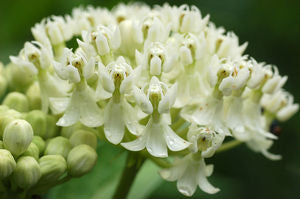
Asclepias incarnata
Swamp milkweed, a well-mannered native perennial for moist ground, and one of the easiest natives to learn seed-saving on. The pods ripen in an orderly way and the seed takes a straightforward cold, moist chill before spring sowing.
- Pods gray and split
- Brown seed on silk
- 30-day cold stratify
- Fall or spring sow
- Monarch host
VI.A seed-saver's late-summer table
A rough field guide to a handful of natives Woodlanders grows whose seed comes ready as the season turns. Treat the timing as a Southern-garden guide rather than a fixed calendar, and always let the plant's own signals overrule the page.
| Plant | Ripeness signal | Cleaning | Dormancy |
|---|---|---|---|
| Milkweeds (Asclepias) | Pod grays and splits, seed turns brown | Strip silk in a bag with coins | Cold, moist stratify about 30 days, or fall sow |
| Native rose mallows (Hibiscus) | Capsule browns and opens at the top | Shake seed from the dry capsule | Nick the hard coat and soak; little chilling needed |
| Wild indigos and pea kin | Pods darken and rattle | Shell out the hard seed | Scarify and soak before sowing |
| Coneflowers and asters | Heads dry to fluff or bristle | Rub heads apart, winnow chaff | Light cold, moist stratify improves the stand |
Field Note One honest caution comes with the pleasure. Save seed only from your own garden or with the landowner's permission, never strip a wild population, and take a modest share even where you may, leaving the lion's share for the birds and the ground. Named cultivars and hybrids rarely come true from seed, so the seedlings you raise from a fancy selection will be their own plants, sometimes a happy surprise and sometimes plain.
From the Nursery
If you would rather start with a proven plant and save seed from your own garden next year, Woodlanders grows the milkweeds the monarchs need and a deep bench of native rose mallows whose capsules are among the easiest seed to learn on. Plant this fall, watch the pods next summer, and the harvest becomes yours to keep.
References
- Xerces Society for Invertebrate Conservation: How to Collect Seeds From Milkweed. xerces.org
- Oklahoma State University Extension: Native Milkweed Germination Guide. extension.okstate.edu
- Native Plant Society of Texas: Milkweed seeds and propagation. npsot.org
- University of Mount Union Nature Center: Collecting and Propagating Common Milkweed. mountunion.edu