


Chionanthus (Fringetrees)
3 plants in this collection
Filter and sort 3 products


About the Chionanthus (Fringetrees) Collection
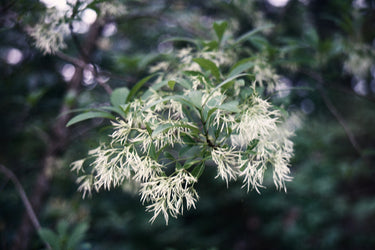
The genus name says what the trees do. Chionanthus is Greek for snow flower, from chion, snow, and anthos, flower, and for a week or two each spring a fringetree in full bloom earns the name outright: narrow, strap-like white petals hang in loose panicles over the whole crown until the leaves all but disappear. The genus sits in Oleaceae, the olive family, kin to the lilacs, the ashes and the tea olives, and shares their clean, opposite leaves and their habit of flowering in clouds.
Two species do the work in Southern gardens. Chionanthus virginicus, the native white fringetree, runs from New England to Florida and Texas, a large multi-stemmed shrub or small tree of 12 to 20 feet whose shaggy flowers open on last year's wood just as the leaves unfold. Old country names (grancy graybeard, old man's beard) describe the bloom better than any catalog could, and the root bark carries a long history in Southeastern Indigenous and Appalachian folk medicine. Chionanthus retusus, the Chinese fringetree, comes from China, Taiwan, Korea and Japan and flowers about two weeks later on the new growth, after the leaves are out. In Korea the tree is ipap-namu, the rice tree, for bloom heaped like white rice in a bowl; in Japan the nickname is nanja monja, roughly what-on-earth-is-that.
Both are small, slow, well-mannered trees for a terrace, a courtyard or the turn of a path, where the bloom can be met at close range and the light scent caught in passing. Fruiting trees carry dark blue, olive-like drupes that the birds strip as soon as they color. Plant in full sun for the heaviest flowering; both species take a range of soils and pH. One note worth knowing: the emerald ash borer has been documented on the native species, while the Chinese species proved resistant in trials, which is a good argument for planting the two side by side.
The listings here include records of fringetrees we have grown in the past as well as the plants on the bench now. Read the full story of the Chinese species in The Tree That Flowers Like Rice, find more small flowering trees among our Canopy Trees, more natives in Southeastern Natives, and further East Asian introductions in Origins: Japan.


