

How-To · Nyssa sylvatica · Southeast
The Tree That Hates to Move
Black gum is the first red of a Southern autumn and one of the hardest native trees to transplant. Here is how we plant Nyssa sylvatica at the nursery, and how to get one through the two slow years that decide everything.
I.Why a black gum is hard to move
Every October someone drives past a black gum on fire at the edge of a swamp, goes home, and tries to dig one. By the following June the tree is a dead stick and the gardener has concluded that Nyssa sylvatica is impossible. The tree is not impossible. The tree is simply built for a life without interruption.
A black gum seedling sends down a taproot before the first true leaves have finished unfolding, and that root keeps going, thick and fleshy and nearly unbranched, for years. Dig a sapling in the woods and you cut the taproot somewhere between the first and second foot, and with the cut you remove most of the plant's water supply and nearly all of the stored starch. The University of Illinois woody plants program puts the matter politely: black gum is difficult to transplant, particular about siting, and therefore usually sold small. Ask Extension is blunter in a 2024 answer to an Ohio gardener whose fall-planted sapling was failing: the taproot makes transplanting hard, and the real killer in that case was likely alkaline soil.
So the whole craft of planting a black gum comes down to three things. Buy a tree whose taproot has never been cut. Put the tree in acidic ground, slightly high. Then leave the tree alone for two years while the roots do their quiet work underground.

II.Buy small, buy container-grown, buy in the cooling
This is the part that goes against every instinct. A gallon black gum, a whip the height of your knee, will stand taller than a five-gallon tree inside four or five years and will almost never die on you, because the small tree still owns every inch of root. Here at the nursery we grow Nyssa sylvatica from seed in deep pots for exactly this reason, and we ship the trees young. A balled-and-burlapped black gum dug from a field is a different proposition: the taproot is gone, the tree spends two seasons rebuilding, and Illinois notes that even a successful transplant needs "about two years to establish" before growing with any speed.
Plant in fall if you can. From October into December the soil in the Southeast is still warm while the air is cooling, and a black gum set out in November makes root all winter and meets the first summer with something to drink from. A spring planting works but asks more of the hose. For the general argument, see Plant It in the Cooling.
The small tree you plant this fall is the big tree you wanted. The big tree you plant this fall is a long argument with a hose.
Can a black gum be moved from the woods at all?
Only when very young, in the first year or two, in late winter, with as much of the taproot as you can follow and a spade long enough to follow at least 18 inches. Even then expect losses. A tree with a trunk thicker than a pencil is best admired where the tree stands. If you want one from a particular wild parent, gather the fruit in October, clean the pulp off, cold-stratify the stones for about three months in damp sand, and sow in a deep pot in spring.
III.The hole, the height, and the pH
First, test the soil, or at least look at the hydrangeas. Black gum wants acidic ground. Clemson's Home and Garden Information Center lists moist, well-drained, acidic soil as the preference, and the Illinois program calls acidic to neutral soil "essential." The Ohio case above turned on this point: a neighbor's blue hydrangeas suggested acid soil, but the gardener had never tested, and alkaline clay will take a black gum down slowly over a season while the leaves spot and yellow. A cheap pH kit or a sample sent to your county extension office settles the question for less than the price of the tree.
Then dig wide and shallow. The hole should be two or three times the width of the pot and no deeper than the root ball. Slide the tree out and look at the roots: if the taproot has started to circle the bottom of the pot, straighten the root down into a narrow slot you open with the spade, rather than curling the root back on itself. Set the tree so the top of the root ball sits level with the surrounding ground on sandy soil and an inch or two high on clay. The extension answer above noted the failing Ohio tree had been set at or slightly below grade, and that planting a touch high helps drainage even for a species that tolerates wet feet.
Backfill with the native soil, not bagged compost; the roots have to learn the real ground eventually. Firm with your hands, water deeply until the water stops disappearing, then mulch two to three inches deep in a ring three feet across, pulled back from the trunk.
Field NoteBlack gum tolerates ground that stays wet for weeks but not ground that stays saturated and airless for months. The tupelo gum of the river swamps, Nyssa aquatica, is the one for permanent water. Nyssa sylvatica is the one for the low corner, the pond margin above the waterline, and, surprisingly, the dry upland ridge where the tree also grows wild.
IV.The two slow years
Here is where most black gums are lost, not to disease but to impatience. In the first growing season the tree may put on a hand's breadth of growth and look as though nothing is happening. Underground, everything is happening. Clemson gives the mature growth rate as slow to moderate, roughly 12 to 15 feet in 10 to 15 years, with irrigation and fertility speeding things along, but that pace only begins once the root system has filled out.
Water weekly through the first two summers whenever a week passes with less than an inch of rain, and give the water slowly so the whole root zone wets. Do not fertilize the first year; the Ask Extension answer specifically advises against it, and a push of soft top growth on a tree with no roots is how you get dieback in August. Do not prune either, beyond removing a broken branch. If the leader bends or looks dead in spring, leave the leader alone until June; black gum leafs out late and a stem that still flexes is still alive.
| When | What to do | What not to do |
|---|---|---|
| Planting day (fall) | Plant slightly high, water deeply, mulch wide | Amend the backfill; pile mulch on the trunk |
| First winter | Nothing; a deep watering in a dry January | Fertilize; prune |
| First summer | An inch of water a week if rain falls short | Fertilize; panic at slow growth |
| Second summer | Water in drought; a soil test if leaves yellow | Move the tree; prune hard |
| Year three onward | Light acid-plant fertilizer in spring if a soil test says so; shape with a few cuts in late winter | Dig anywhere near the root zone |
V.Fruit, sexes, and the bird question
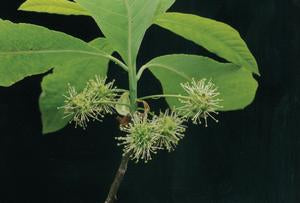
Black gum flowers are small, greenish and easily missed, open in April and May, and are worked hard by bees; tupelo honey from the related water tupelo is famous, and black gum contributes to the same spring flow. Clemson describes the species as polygamo-dioecious, which is a long way of saying most trees are mostly male or mostly female with a scattering of perfect flowers thrown in. A single tree may set some fruit, but for a reliable crop of the half-inch blue-black drupes that robins, thrushes, waxwings, turkeys and bluebirds strip in September, plant two or three.
The fruit is sour, hence the old name sour gum, and the drop can be messy on a patio. Site the tree away from paving if that matters to you; the birds will not mind. For the broader design question of where the tree belongs in a garden, we wrote Where the Black Gum Wants to Stand, and for the tree's long human history, The Black Gum Chronicles.
Nyssa sylvatica
NativeZones 4 to 9Seed-grownScarlet fall color
Our black gums are grown from seed in deep containers and shipped young so the taproot arrives whole. See the listing.
Nyssa ogeche
NativeOgeechee limeCoastal plain
The Ogeechee tupelo of the Georgia and Florida river swamps, the source of true tupelo honey, for the wettest ground you have. Take a look.

VI.What goes wrong, and what does not
Leaf spot is the common complaint: dark blotches that spread through a wet summer and make the tree look tired by August. The spots are unsightly, rarely serious, and worst on trees in poor air circulation. Clemson lists the other occasional visitors (cankers, rust, tupelo leaf miner, black twig borer, scale) and notes that several newer cultivars, 'Red Rage' and 'Green Gable' among them, resist leaf spot. The species tree we grow is the wild form, which carries more genetic variety and a slightly rougher constitution; we think that is a fair trade.
Deer browse young black gums, so a wire cage for the first three years is cheap insurance anywhere deer walk. Pollution is the one siting fault the tree will not forgive; Illinois notes black gum needs clean air and sulks as a street tree in heavy traffic. And the bark, which with age breaks into the deep blocky plates everyone compares to alligator hide, is thin on a young tree: keep string trimmers well off the trunk.
Growing black gum from seed, the nursery way
Gather ripe fruit in late September or October, mash and rinse the pulp off in a sieve, and sow the cleaned stones in a deep pot of acidic potting mix. Leave the pot outdoors through winter for a natural cold period of 60 to 90 days. Germination comes in late spring. Grow the seedling one full season in the deep pot and plant out the following fall; never let a seedling spend a second year in a shallow container, because the taproot will circle and the tree will carry that fault for life.
If you keep a black gum through the two slow years you will have a tree that lives, by most accounts, for several centuries, that holds the first scarlet of the Southern fall every September, and that asks almost nothing of you after the fifth year. For the autumn routine on this and other old-fashioned natives, see Autumn Care for the Southeast's Heirloom Woody Plants.
§References
- Clemson Cooperative Extension, Home and Garden Information Center, Black Gum
- University of Illinois, Woody Plants, Nyssa sylvatica
- Ask Extension, Nyssa sylvatica fall 2023 transplant concern (2024)
- UF/IFAS, Nyssa sylvatica: Blackgum (ENH-585)
From the Nursery
Black gum and the other tupelos live in our Canopy Trees collection. We ship them young and taprooted on purpose. Plant one this fall, then do the hardest thing in gardening: wait.